|
|||||||||||||||||||||
|
|
|
||||||||||||||||||||
|
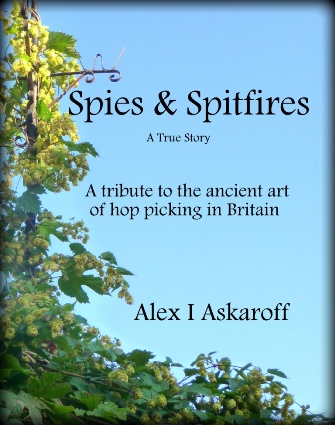
Alex I Askaroff
This is a great true story that took me a year to write.
Spies & Spitfires By With many thanks to Dorothy Sullivan and Maureen Byrne and
Jacqueline Johnson who’s wonderful memories inspired me to write this
true story of a little chapter in our history. “Doll, Doll, Dorothy! Wake up it’s time to go,”
whispered her mum gently shaking her through the bed sheets. “We are
going where the skylarks sing and the air smells of the sea, where
dreams are made. Make sure you put on the old clothes I’ve patched for
you!” Before Big Ben had chimed four, Dorothy, with her
mum, dad, brothers and sisters were walking into the great city of
London. Dorothy had a small bundle wrapped tightly under her arm
containing an assortment of worn out but well-patched clothes that she
had saved throughout the year. Her mum had spent many hours sewing on
patches with her old treadle machine. She clutched her brother’s hand tightly and the
small group of figures made their way through the darkness into the
city. Huge buildings loomed above her in the lightening sky and soft
mist circled around the streetlamps like steaming cauldrons. It was
September and the late summer air held a little chill. The year was
1929. In America the Great Depression was about to start as the Wall
Street Crash loomed ominously closer. Factories in America had been producing far too many
goods. Workers had their hours cut to avoid massive over-production and
so could afford to buy less and less in the shops. The knock-on effect
was a collapse in world trade. Effects were felt in Britain and by 1935
unemployment had reached as high as 68 percent in places like Jarrow.
The Jarrow men, hard and proud shipbuilders, marched on London. Their
efforts had little effect but became a landmark of the Great Depression. Doll, totally oblivious to other worldly goings on,
was jam-packed full of excitement she stared upward at the imposing
skyline and her eyes shone diamond bright as she followed her parents. At St Paul’s Cathedral, they said goodbye to their
dad with hugs and kisses. He was off to deliver the post for his part of
Central London as he had done since the end of the Great War, it was a
very different trade to his army postings in India but civilian life was
an enjoyable one to him. Dorothy looked back to see her dad waving on the
corner. She would not see him again for many-a-week, she waved but he
had disappeared into the mist. “Doll catch up or we’ll miss the
train,” shouted her mum who was beckoning to her. Now they were on
their own just mum and her band of kids trotting along the old London
streets. They had walked for nearly two hours, seen the sky
turn pink then gold as dawn chased darkness up the streets of London.
Shadows shortened as the great city slowly came to life around them
as it had done for over two thousand years. Cart horses, buses,
lorries, trams and taxis filled the streets. Doll’s family arrived at the steamy railway station
where whistles blew and trolleys rushed past with porters shouting. They
boarded the Hastings train and Doll found a seat by the window. She
gripped the bundle on her lap and peered over the wooden sill at the
world rushing around outside. The
train hooted, shunted and chased the shining steel rails out of the
city. Mum handed out breakfast in brown paper wrappers. Doll munched on
her sandwich watching the endless rows of brick buildings slowly turn
into rolling countryside as they clickety-clacked along. She lay her
head on her mum’s lap and drifted into sleep with a half eaten
sandwich in her hand. Doll’s mum gently lifted the sandwich from her
hand and stroked her hair as she slept. “Wakey wakey kids we have arrived,” said mum
gathering their baggage from the overhead racks. Doll rubbed her eyes,
brushed some crumbs from her front and smiled as the train blew its
whistle. At Hawkhurst Station, they all bundled onto the
platform, walked outside and waited. The sun was up and the smell of
fresh country air poured into her little lungs. She knew what she was
waiting for. She had been here before, as had her brothers and sisters.
Shortly before nine she heard the familiar clip-clop noise of the
horse-drawn wagon. It drew up and they all clambered aboard, sitting on
the hard wooden slats at the back. “Walk on, walk on,” came the strong deep voice of
the wagon master in his thick local accent as he released the
block-brake. The horse moved off at a slow plod. Doll sat smiling, she
stared up at the trees as the wagon made its way along the country lanes
toward Sandhurst. The wagon master occasionally gave commands and
applied the blocks as they went up and down the twisty lanes. They were on the Sussex-Kent border heading towards
Farmer Reeves’ at Old Place Farm. Like many other families they were
heading to the farms of southeast England. As summer slowly turned
toward autumn in the countryside it was a special time, it was
hop-picking time. Hop picking had gone on for centuries on the fertile
soil of eastern England. A good pint of ale was enjoyed as much a
thousand years ago as it is today. They had dressed in their patched clothes as they
would be sleeping in old tin huts and working the fields throughout
September. Doll would be doing little work as it was more of a holiday
for her family. The old adage that a change was as good as a rest was
true. For the next few weeks they would rise with the lark and pick hops
for Farmer Reeve. The cart passed the pretty village of Sandhurst, down
one more lane and then into Church Lane. They passed a row of cottages
on their left, then up the short hill toward St Nicholas church, and
there they were! William Reeve came to the gate to greet them dressed
in his usual farming breeches, held up with thick braces, his sleeves
rolled up to the elbow and on his head his favourite pork-pie hat. To
Doll he was a friendly old man. His craggy, weather-beaten, face wore
the years of sunshine and open air on it like a well-used leather bag.
Locals said that he was made of iron pulled from an old Roman forge near
the village. He certainly had lungs like a blacksmiths bellows. As the
decades went by, people came to believe in the old village tale. For
while the years changed, Farmer Reeve stayed the same, he seemed
eternal, like the land he worked. He greeted them and walked to the front of the horse
grabbing its chinstrap. He marched the wagon down the old track towards
their accommodation. Doll hung on as the cart rolled past the four large
conical hop-drying kilns of the oast houses that looked like plump Dutch
maids with white bonnets. A gust of wind made the bonnets swing around
to point out over the countryside toward the English Channel. “They are just saying good morning to you all,”
chirped up Farmer Reeve as his hobnail boots trod the path, tapping with
the horses, down to the huts on the corner of the field. “Look Mum, the sea, I can see the sea!” squealed
Doll with excitement. “Yes my dear and so you shall for many a week and
smell that sweet scent! Not like our London air is it? That is the smell
of the countryside—the smell of heaven.” They unloaded on the corner of a large field where a
row of huts waited for them. Inside they unpacked all their belongings
and made the single room a bit more homely. Outside they chatted to some
of the other workers who had already arrived from Eastbourne and
Hastings. Down at the barn all the Brighton families made themselves at
home and before long a pot was boiling and lunch was made. “Enjoy yourselves kids,” Mollie’s mum shouted
to her children as they ran off to play in the fields, “for tomorrow
you will be working for your supper!” Sure enough, as the sun rose, Farmer Reeve was
calling all the hop-pickers and giving them their orders for the day.
Which field and row to pick. Doll and the other kids followed behind
their mums dragging old umbrellas, boxes and bowls. They got to the
vines that stretched and twisted around the chestnut poles. The poles
were lashed together at the top like totem poles and beneath their feet
lay large coconut matting. “Now
all of you,” sparked up their mum opening out the umbrellas and
sticking the upturned points into the soil, “you remember what to do!
Pick as many of the flowers as you can and drop them into the
containers. When you have filled them I’ll empty them into my sack,”
she said, pointing to her large sack. “If you fill five umbrellas I
shall give you a whole penny! If you save your pennies you’ll have
enough to buy all sorts of little gems back home. Now off you go kids,
get to it!” Doll, with her brothers and sisters, attacked the hop
poles with glee and stripped the hops flowers from the vines. Doll being
small would get the lower hops while her taller brothers and sisters
would reach up higher leaving the rest for the adults. Doll had to be
careful as the hops were protected by long prickly stems that would
scratch if given half the chance. Rows of pickers moved along in slow procession
working the bines. Bines were the long vines that grew up the strings
supported by wires and chestnut poles. The bines were planted in small
circles of four. They were twisted together at about waist height to run
up the strings that then fanned out above into the canopy above the
ground. Once picked all the hops were dropped into a bin, which was a
large sack, supported by a wooden frame with handles at each end. Four
or more pickers could work around the bin dropping hops in as they
picked. When they moved along they would tug the wiry bine down from its
support and lay it across the bin then pluck the hops carefully and drop
them straight into the bin below. The farmer did not accept hops that
were crushed or dropped into the dirt. No leaves no crushed hops no
dirty hops! However more often than not they would be chucked into the
bin when he was out of site, it all added to the flavour! Once the long
sinewy bine was picked clean it would be neatly wound up below the poles
and the pickers would move on to the next one. Pole men would work in front of the pickers pulling
down the larger bines of flowers from the top of the support wires. As
this timeless yearly harvest went on Doll would drag her umbrella up to
mum for emptying then run back to grab more hops. Playing, picking and
generally messing around all at the same time. The sun rose and shadows shortened. The cool morning
air of late summer warmed and dozens of workers picked their way through
the fields, stripping off clothing as the sun reminded them winter had
not yet conquered summer. In the hop fields Doll was in another world.
The large hop plants towered over her like great pillars reaching
skyward. Where the fully-grown hops touched in the middle of the rows
the sunlight poured through them in a wonderland of green. Each way she
turned, North, South, East and West she was in a green world of rustling
leaves and musical birds. She was in God’s cathedral far away from the
noise, smoke and pollution of 1920’s London. Oh how happy could one
little girl be, how full of life and fun running around in wonderland. Occasionally someone would start to sing. First one,
then two, then the whole field would burst into song filling the country
air with Cockney songs that lifted and mixed with the skylarks and
swallows. At midday all the pickers would break for lunch. A hop pot
would be swung over an open fire for hot tea, then sandwiches and cool
beer would be passed around. There is no cup of tea on earth that tastes
like a cuppa brewed from a hop pot. As the sacks were filled a local man called the
measurer with his daughters would measure the hops picked by each
family. He would scoop out the hops from the bin with an oval shaped
wicker basket called a bushel and fill a sack called a poke. It took
many bushels to fill one of the pokes. As the measurer scooped
his daughters would count, making a note of who had earned what in their
books. The pokes were then loaded onto the cart and taken away for
storage. Families would usually save all their money until the
last week of hop-picking. However if a family wanted, they could have a sub
that would then be docked from their wages at the end of the month.
Sub’s were common for come the weekend many families were visited by
their men-folk from the City. They would all toddle off down the local
pubs, eat, drink and be merry. The pubs had to put a charge on the
glasses as they had a habit of disappearing down to the farms. You only
got your deposit back once you returned your beer-glass at the end of
the nights drinking. Many pubs did not allow gypsies and there were signs
outside the doors barring gypsies. The gypsies moved around the
countryside with ease and on Sundays they would make their way up to
Horsmonden near Tunbridge Wells. At Horsmonden, on the village green,
there would be horse-trading every Sunday. The horse would be smartened
up and decorated with brasses and ribbons then trotted around the green
their masters running besides them. Local merchants and farmers would
bid against each other for the animals. Gypsies were skilled horsemen
and knew horseflesh like few other people. They were banned from the
pubs as they were notorious drinkers, drinking led to betting, and
betting led to fighting. However there was usually a willing local lad
that helped them get a tipple or two. At
the end of the daily hop-picking the pickers would all return from the
fields, their hands and clothes stained greeny-brown by the hops. The
farmer would always make sure there were bundles of firewood faggots by
the huts. Over the open fire dinner would be cooked, stews made and
potatoes boiled. As the evening wore on the families would sit around
the fire exchanging stories and singing songs. Kids would bake jacket
potatoes and apples in the ashes, prodding them with sharp sticks to see
when they were ready. Under the stars, their faces warmed by the night
fire and their bellies full of good country food, they were children in
paradise. Around
the area there were several local village lads that were always playing
around. One little urchin was nicknamed “half-a-penny or ape-nee” by
the cockneys. They say it was because he was so daft that if you gave
him a penny for his thoughts you would get change! Although he was
supposed to be a bit dippy he knew what was what! The scruffy little
rascal was always up to mischief with holes in his shorts, mud on his face, scuffed knees
and tangled hair. He had the smile of an angel and his giggle was so
infectious he could make you turn to jelly and forget why you were
telling him off. No one knew if he could read or write but he could
dance around the campfire and play the fool to perfection stuffing hops
in his hair mimicking London Cockney slang. His rendition of maybe
I’m a Londoner would be enhanced by his hopping around the fire
like an old mother hen with a branch protruding from the back of his
shorts. This would reduce everyone to tears of laughter. On
Sunday, before people would arrive at St Nicholas Church, he would close
the gate to the car park. It was open all week! He would then rest on
the fence without a care in the world as if he was bird watching or
something. When the toffs turned up he would quickly run and open the
gate then dutifully nod his cap, often they would tip him for his
service. He earned a pretty penny on Sundays for opening a gate that was
normally open! He had wind worse than a camel. It was probably all
the rough food he ate. More than once he was seen chomping on dandelion
leaves and wild berries. He could almost burp in tune and when told off
for his rude behaviour he would run away giggling and shout, “better out of the attic than the basement!” During
the war the village kids were always up to something, collecting scrap
for the war effort, or keeping an eye out for potential spies. If you
left anything lying around it would not be there for long, a spoon or
tin cup, the pram wheels, even the railing outside the houses were not
safe, turn your back and they would be cut off and taken. The kids then
swapped all their booty for chocolate from eager government officials.
Once a month it was collected and taken for recycling into military
hardware. A daily routine soon fell into place and an old tin
bath would be filled with water and dirty clothes cleaned when
necessary. And so the month went by, picking, cooking, cleaning in a
cycle repeated every day come rain or shine. Doll loved every second.
She dreaded the end of the month when Farmer Reeve would wave goodbye at
the gate and they would head back up the old twisting lanes to the
railway station. Another year would pass in the city as they returned
to the normal hubbub of urban life. But before long, time would come
once more for Doll’s favourite excursion to the country. Doll would go to sleep the night before their annual
hop-picking adventure bursting with excitement. She would fall asleep,
as excited as she was on Christmas Eve, and wait for her mum to come for
her in the early hours. Years passed and Doll grew. At 15 she had already
started work at a London printer’s but she always made sure she had
the time off for the family’s hop picking excursions. The Second World War came but that never slowed the
family down, they still made the yearly walk from their home in
Islington, down to Alders Gate over Cheapside, past St Pauls to
Blackfriars Railway Station, sometimes climbing over the bomb-damaged
rubble as they went. Some nights in the city Doll would watch the German
air raids as they dropped tons of bombs on the buildings. The moaning
minnies or air raid sirens would wake children. As the sirens howled
into the night, waking all, there was no time to dress. They would pull
on their siren suits, a one-piece garment with a long zip up the
front, and then run for the damp dark shelters. Often Doll watched the
great city burn. Searchlights would pierce the night sky looking for the
planes, catching the barrage balloons in their beams that were
laughingly know by all the children fat elephants. Anti-aircraft
guns or ack-ack spat out tracer bullets and fury into the darkness as
the Bombs dropped and debris fell. The pavements shuddered in a deadly
dance of bouncing rubble. Factories and houses fell and became no more
than piles of smouldering ashes. In 1940 the government revived the
Women’s Auxiliary Force, the WAF, to help with the shortfall of
manpower in the factories and fields. By
1940 over a quarter of a million Londoners were homeless and thousands
killed. Lord Bevan’s fat elephants had little effect on the
relentless offensive of the Luftwaffe. Bombers sometimes dropped as much
as 500 tons of bombs a night on the capital. The raids became known as
the Blitz, short for Blitzkrieg or lightning war. The raids increased
after Hitler’s plans to invade by sea were crushed. In
the same year, most British forces know as the British Expeditionary
Force (BEF) had been withdrawn from Europe and Britain became an island
stronghold, a last hope for freedom. The dramatic rescue made heroes of
ordinary sailors and fishermen who had used their boats to ferry the
soldiers to safety, across the English Channel, under fierce fire from
Stukas and Messerschmitts. Winston
Churchill had only been in office a few days when he was faced with the
daunting task of trying to rescue over 400,000 British and French
troops. Churchill, by general consent of all the political parties, was
chosen to lead Britain after all confidence was lost in Neville
Chamberlain. He was then informed that the troops had been forced onto
the beaches of Dunkirk and would shortly be destroyed by the advancing
Germans. Churchill
had been unaware that, the commander-in-chief of the British
Expeditionary Force (the BEF) in France had given the order to retreat.
To keep morale high news of the British retreat was kept from the public
who were informed that the war effort was going as planned. May 1940 had
indeed become Britain’s darkest hour, it was the closest that Britain
came to losing the war. Unless the BEF could be rescued, protecting our
shores from invasion would have been an impossible task. At
the Admiralty, operation Dynamo was rushed into effect overseen
by Vice Admiral Bertram Ramsey. All available ships were sent to France.
Fishing boats, yachts, Thames barges, anything that could float was
commissioned to save the troops. Boats that had no engines were strapped
together and towed across the channel through miles of minefields. On
the shores of France, the lightly armed and retreating BEF was in
disarray, hounded by the German SS and Hitler’s 3rd Panzer
division. When orders were received to retreat the troops rendered the
heavy artillery useless to the enemy and made for the coast.
French and British forces engaged the Germans in a ferocious
rearguard action allowing most of the British troops and as many French
as possible to get to the beaches in the hope of rescue. As
the BEF moved to a small strip of beach at Dunkirk the German Luftwaffe
pounded the shores dropping over 50,000 bombs in a few hours. The sand
deadened the effectiveness of their bombs but still killed thousands of
soldiers and sank hundreds of boats The
painstakingly slow evacuation was underway and Churchill was put to his
greatest test as Britain’s new leader. Peace talks and surrender were
the most obvious option forwarded by Lord Halifax, but Churchill stuck
to his guns and decided to go down fighting. If Britain capitulated it
would have been the end of the war and Nazi domination in Europe would
have followed. It
was not until the 31st of May, days after the evacuation had
begun, that the British public were finally made aware of the disaster
happening across the Channel. Ten
German divisions closed on Dunkirk. Hitler sensed that the end was near
but did not realise how effective operation Dynamo had been. Over a
third of a million troops had been rescued and brought safely to British
shores. Finally,
the remaining troops on the French beaches surrendered. In ten days over
100,000 British and French troops were captured, wounded or killed. Britain
became home to a rag-tag army of British and European troops including
over 100,000 Polish who had fled from the pursuing might of Nazi
Germany. Churchill
announced the full extent of the disaster to the public. He then made
one of his famous inspirational speeches that told of the disaster but
also lifted the fighting spirit of the British people. “We
shall not flag or fail. We shall go on to the end. We shall fight in
France, we shall fight on the seas and oceans, we shall fight with
growing confidence and growing strength in the air, we shall defend our
island, whatever the cost may be, we shall fight on the beaches, we
shall fight on the landing grounds, we shall fight in the fields and in
the streets, we shall fight in the hills; we shall never surrender.” Churchill
was preparing Britain for the oncoming invasion that would happen once
the Luftwaffe had cleared the skies of British planes. In Europe the
largest forced migration of people in human history took place as
Germany dominated the continent. By June, an ominous lull had fallen over the skies as
both Germany and Britain prepared for the final battle for supremacy of
the air. Germany consolidated many of its captured airfields closer to
our shores. They used slave labour from occupied factories to
mass-produce arms. In Britain the Royal Air Force desperately trained
pilots for the oncoming battle that all knew was coming. Operation Sealion was the German codename for the invasion of
Britain. The first part of their plan was to attack the radar stations
and airfields, then the harbours and factories. This was to pave the way
for the land-invasion. Over the hop fields of southeast England the future
of the country was to be decided. Young men hardly out of school would
stand with volunteer pilots from all over the world, from New Zealand to
Canada, against the mightiest fighting machine the world had ever seen.
The Battle of Britain was about to begin and just over 500 fighters were
to try and stop over 3000 German planes from destroying Britain. Surprisingly, hops were considered vital to the war
effort, not only for their recuperative powers amongst serving men in
the shape of a good old pint of beer, but also for their medicinal
qualities and sedative powers. Because of that, hop growing continued
throughout the war, as did, of course, hop picking. Land Army girls
worked the fields and planted the crops while their men prepared to
fight the enemy. At the outbreak of hostilities Doll had gone to work
at a munitions factory and her family carried on as best they could. As
the hop-picking season approached they would gather all their old
clothes and head for the countryside for their special working holiday. Britain became a lone voice in a dark Europe.
Anti-tank traps were dug all along the coast and thousands of small
concrete bunkers called pillboxes peppered the landscape. Britain’s
coasts looked more like prison camps, where once children built
sandcastles, the deckchairs and sunshades were replaced with endless
miles of barbed wire, concrete and minefields. Old soldiers, civilians
and Home Guard added to the numbers of the armed forces and manned the
pillboxes each night knowing it was their job to slow down any invasion
as it marched on London. They all knew their pillboxes would have become
their concrete coffins had the German blitzkrieg advanced on London. While working at the hop farm one year, Doll noticed
that a foreign gentleman had rented a cottage just off the track to the
farm. He had positioned a large telescope in the back window. The
telescope could not be seen from the road but from the fields she could
clearly see it pointing out of the cottage window. He would often be
seen staring into his telescope and jotting down notes. He had a perfect
view over a huge part of the East Sussex landscape down to the Channel
and beyond. “He’s a spy,” whispered one of the pickers.
“I just know he is.” “Don’t be so daft,” came the reply. “Mind you
it does make you wonder what he’s doing all day looking through that
telescope!” “And he takes notes!” nodded another. After much consideration, around the fire one evening
and with a few pints of beer, it was generally decided to report the
fact to the local constabulary. It could just be harmless bird spotting
but it may be something more sinister! Anyway the police were sure to
sort it out. If he was innocent then there was no harm done! Loose
lips sink ships were the bywords of the day. Posters were everywhere
warning of strangers and to keep a watchful eye out for anything
unusual. No sooner had they reported the inquisitive stranger
than all hell broke loose. It was as if they had given a missing piece
of a puzzle to the police. First, they arrived and took all the women
away, posting men on all the exits. Then the Ministry turned up and
carted the man off. After that a group of men came in and spent ages
sifting through all the belongings in the house. The hop-pickers gossiped for days and all patted
themselves on the back for they had surely saved Britain from disaster!
No one ever saw the stranger again! In the summer of 1940 the ominous lull ended and the
dog-fights began above the southern skies. Doll learned it was The
Battle of Britain. Germany had to control the skies for the prelude to
their land invasion, or Operation Sealion as it was know. German
planes would come in low over the fields trying to get to their targets
undetected. On the southern airfields, squawk boxes would wail
and pilots would scramble to their planes to intercept the enemy. Over the rolling fields of southeast England fierce
fights ensued. Planes roared through the skies, bullets spat out in
anger, planes exploded and pilots died. When the planes crashed, the
girls would rush over to the wreckage to help, but more often than not
there were only bodies in the twisted burning metal. One German pilot
managed to crash-land his Messerschmitt BF 109 and was rushed to
hospital. The unlucky British pilots were taken back for burial
at their family churches but the Germans were buried in the closest
churchyard. At St Nicholas they buried several German pilots but after
the war they were exhumed and taken home to their families. There were several key figures instrumental in saving
Britain in 1940 such as Sir Keith Park. Sir Keith Park controlled the
response to the German attacks hour by hour with superb skill.
His brilliant use of the new radar defence combined with
observation posts allowed him to organize the air defence minute by
minute. Information was rushed to the air force allowing the pilots to
scramble and intercept the German attacks. On September 28th a fierce encounter took
place over the southeast. Squadron 605, based near Croydon, was
scrambled to intercept a large formation of ME 109 fighters. During the
furious dogfights that ensued Flying Officer Peter Guerin was killed in
action. He was one of the many that gave their lives for their country,
a hero in every sense of the word. On Padgham Corner adjacent to South
View Farm where his body was found, his mother kneeled and placed a
simple wooden cross in the soil. At the Woods Corner end of the Bodle
Street Green road there still stands a small cross, a reminder of our
young hero who shall never grow old, a young man who fought and died to
save our way of life. In West Grinstead there is a memorial to Douglas
Arnold, a spitfire pilot who was one of the lucky ones to survive the
war. On his gravestone is one of the finest poems ever written. It was
written by John Gillespie Magee Jr, a young fighter pilot flying
Spitfires, for the Royal Canadian Air force.
John
penned this superb poem to his mother just few weeks before he was
killed on active service, he was 19. ***** High
Flight
Oh!
I have slipped the surly bonds of Earth ***** By the end of September the German losses were so
great that Hitler called off Operation Sealion and looked east
for other conquests. Britain’s shores had been saved by a small band
of heroes. Later Churchill spoke the immortal words, “Never
in the field of human conflict have so many owed so much to so few.” The casualties had been devastating but Britain had
won its most important battle in the war, control of the skies! Britain,
with Churchill as their resilient and dogged leader fought on in a
desperate one-sided war. A war that only the foolhardy but wonderful
British with their bulldog nature, born from centuries of war and
invasion could ever dream of winning. As hostilities progressed Churchill gathered support
among his allies across the globe and started to build a force that
could free Europe from tyranny. Doll remembers the first time she saw American troops
arriving in London. “We all ran out into the streets to see them march
past. We were waving and shouting, clapping and cheering. They looked so
big and strong and healthy they oozed self-confidence, it was wonderful
to see. Our boys had been through so much, thin, worn and rationed - but
the Americans, Oh they looked magnificent! What a sight! I was standing
next to an old woman who was crying. I asked if she was all right! She
told me that for the first time in the horrible war she had a glimmer of
hope and there was suddenly light at the end of a long dark tunnel! ‘I
feel a heavy weight being lifted from the pit of my stomach and a knot
untying from my heart’ she sobbed. ‘For the first time in two years
I have a laughter in my heart and a smile on my lips.’ Suddenly I
found tears welling up in my eyes and we both cried and waved
together” The Americans and Canadians brought with them more
than just chocolate and hope, they brought with them laughter, enjoyment
and silk stockings! Where the Odeon Cinema stands today was the old
Paramount Cinema and below it was a dance hall. The troops taught the
girls all the new American moves and Doll would go to dances there and
at the Hammersmith Palais (pronounced Pally by the English). It was a
bit of sugar on the bitter pill of war and thoroughly enjoyed. Where the
English boys were very polite and restrained the Americans lived in the
spirit of the moment, no one knew what tomorrow brought. As the big-band
sound of the jitterbug shook the dance floor the American lads
would swagger over to the girls stare deep into their eyes and say,
“Come on snake let’s wiggle!”
Some nights the air raid sirens would screech out but
they just kept on dancing. If they were going to be killed, where better
than enjoying yourself on the dance floor instead of cooped up in a
shelter wondering if the next bomb had your name on it. Live for today
for tomorrow may never come! What great dance nights Doll had and what
memories. As the all-important D-day approached, on the 6th
of June 1944, Britain amassed combined armies of over three million men
to storm the Normandy shores. Large numbers of British soldiers were stationed on
the beach at Lydd not far from the farm. On the weekends they would send
a truck to pick up Doll and the other young women then proceed around a
few of the local villages. They would arrive back at the barracks with a
truckload of girls. Passes were checked then they would dance the night
away. At the end of the dancing the passes were checked again, everyone
was loaded onto the trucks and dropped back all over the countryside to
their various villages. What a way to spend a few hours in 1940s England!
Dancing the night away with soldiers in their barracks on the beach. For
a few hours each week the thought of the impending strike on Europe was
put far away into the back of their minds. Hop-picking went on straight through hostilities and
when Victory in Europe or VE day finally came great celebrations were
had by all. Doll went up to St Pauls in London to hear a sermon
and then, while the King, Queen and Churchill waved from the balcony at
Buckingham Palace she went to Trafalgar Square. In Piccadilly tens of
thousand gathered to celebrate and party until the early hours. After the war the Americans, Canadians and forces
from so many countries around the world packed up and shipped off home,
many thousands taking their new British wives with them who were glad to
escape the drudgery of post-war Britain. A demolished country lay in tatters and had lost a
generation of young men and women. They say that the British walk
proudly upon the earth and it was in the times of greatest danger and
darkness that their spirit shone the brightest. Surprisingly, Churchill was defeated in the post-war
elections and retired for a short period to lick his wounded pride at
Chartwell, in Kent, overlooking the same sweeping countryside that Doll
and her family had worked. There he recuperated and returned a few years
later to taste a glorious victory at the polls once more. Through his long life and endless deeds he eventually
became known as the greatest Briton that had ever lived. From a shattered Britain the word had gone out to her
Empire. Her heart had been damaged but not her soul. Men came from all
corners of her realm to fill the gaps left vacant by those who had
sacrificed their blood for freedom. Indians and Jamaicans came to drive
the trains, and run the buses, Africans, Poles, Russians, Europeans and
more all heard the call and answered with their sweat and toil. Much of the forces were de-mobilised or de-mobbed.
The men went back to the factories and farms that had been kept going by
women. Army barracks were changed and rebuilt into holiday camps and
firms like Butlins entertained young families in a newfound community
spirit that had been forged in the furnace of war. Slowly, the once-great nation dusted off her clothes
and stood back on parade. To be counted again amongst the great nations
of the world. And so the world turned once more and a new
generation was born into a post-war era, and as for Doll! Doll had finished up in the munitions factory where
she had worked during the war years and returned to her job at the
printers, there she fell for Patrick and in 1947 wedding bells rang out
over a war-torn but re-energized London. Two years later Doll decided to
have one last trip hop-picking. The year was 1949. Doll had a husband
and family to look after — but just one last time Doll was going to
find her green heaven. “Pauline,
wake up my little darling wake up,” whispered Doll in her daughter’s
ear. “I am going to take you somewhere very special. Somewhere dreams
are made. We are going where the skylark sing and the air smells of the
sea. We are going hop-picking!” Doll, with her daughter and the rest of her family
walked the familiar path along the London streets, in their patched
clothes, to the railway station to catch the southbound train. Even all
those years later she could not sleep the night before. Epilogue Of course, old-man Reeve was not really made of iron.
Although he had outlived just about everyone of his generation,
eventually Father Time came to call. There is a little corner of paradise down an old path
on the Kent-Sussex border that leads to St Nicholas Church. In the far
bend of the graveyard lies old man Reeve. He had lived until his 93rd
birthday. There he rests, eternally, above the land that he had worked
for so many decades in his pork-pie hat, braces and breeches.
He overlooks Old Place Farm with its hop drying oasts still
standing like plump Dutch maids in the valley below. The skies are peaceful now. No more dogfights or
bombs, just birdsong and the wind whispering through the fields where
the hops once grew and Land Girls once toiled. Legend has it that in
late summer, when the ripe grain is high. When the hedgerows are full of
wild honeysuckle and berries. When the breeze carries the scent of the
sea and the skylark calls to the song thrush, if you listen very
carefully, you may just hear the sound of laughter and Cockney songs
drifting over the countryside. The EndI do hope you enjoyed this story, it took almost a year of hard work and research to write. Please let me know what you think. alexsussex@aol.com If you would like to read more stories like this they are in my Random Threads trilogy.
For more information on how to order and
prices just mail me anytime: alexsussex@aol.com More Stories Main Site Index: Index
©
Alex I Askaroff 2005 |
|||||||||||||||||||||
|
|
|
||||||||||||||||||||
|
|||||||||||||||||||||