|
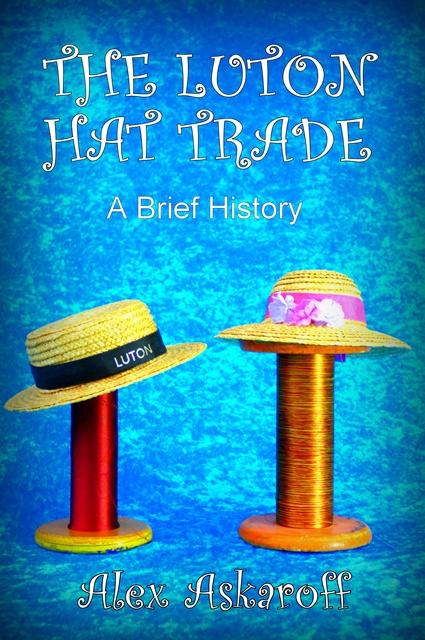
The Luton Hat trade

From the 1850's a process called "carroting"
was used in the making of felt hats. The
animal skins were rinsed in a carrot coloured solution of
the mercury compound, hence the name.
No
one realised the deadly consequences of these operations to the
workers.
This process separated the fur from the
pelt and matted it together and the vapours
did not seem too bad.
But the
vapours it produced were actually highly toxic
leading to a lot of mercury poisoning in the hat industry. The
psychological symptoms associated with mercury
poisoning led to workers
behaving erratically in an almost insane manner which inspired
the phrase "as mad as a hatter."
Use of mercury in
the felt and hat industry had stopped by
1941.
The hat trade
today is only a tiny part of a once huge world-wide industry.
Everyone use to wear hats especially the men. Even in my youth it
was rare to see a bare head. I remember seeing pictures of London
in the 1930’s where thousands of people were rushing here there
and everywhere and nearly every head had a hat on it.

Hat making was
big business and for some reason Luton in England was at its
centre.
The hat making
industry may have started as early as 1610 in the Luton area and
over the next 400 years became synonymous with the town. By 1680
thousands of people in the Luton area were being employed making
hats. The height was the late 19th century and the
trade dominated Luton.

No one is
exactly sure why the hat industry blossomed in Luton north of
London. There are a few fanciful tales and legends but precious
few facts. One legend tells that Mary Queen of Scots son, King
James, brought the trade with him when he claimed the crown of
England after Queen Elizabeth’s demise without an heir.
It is a
far-fetched thought but there must have been a reason for Luton to
be the centre of the hat-trade besides it closeness to London and
abundance of materials.
What we do know
is when expertise in a field was learnt and travel was difficult,
that expertise stayed in an area. Much like the Cycle industry in
Coventry or the Needle industry in Redditch. Hatton Gardens is
still a diamond centre and Brick Lane where some of my French
Huguenot family came to in 1685 is still one of the best places to
buy silk over three centuries later.
Today moving of
equipment and people is so easy that these specialized industries
are now spread over the whole world. Some of the remaining hat
businesses in Luton simply import ready-made hats form the Far
East where
labour
is still inexpensive.
Hats are still
produced in the town today though on a much diminished scale to
its glory
days.
Luton
Tales
Now here comes the
interesting bit. Short stories from Luton.

Linda Kilpatrick was a hat maker towards
the end
of Luton’s domination of the hat trade in the
1960's. In her own words you can travel
back
with her to the Luton Hat Trade as it really was.
The Hat Trade in Luton 1962-1965
By Linda Kilpatrick-
nee Greenwood
Linda now resides near Houston Texas, USA. She is a widow, who
was married thirty-four years and has one daughter.
This is her story.
In June 1962 I
turned fifteen years old and two weeks later my school life
ended. Leaving school at fifteen was quite normal at that time in
British
history as only the most fortunate stayed on at school
until age sixteen and
went on for further education studies. I
was the forth down of eight children
and it was my turn to get a
job and contribute to the family income.
There were tons
of hat factories in Luton in the 1960’s but most are gone now. My
sister worked in the hat trade before her marriage and then for
seven years did the trimming from home when her son was small.
I left home the
Monday morning after my school life ended and walked along the
back roads of Luton, Bedfordshire and stopped at every hat factory
along Guildford Street. Guildford street has since been ripped
down for big parking buildings as Luton is now a University
town
and everything has changed.

For measuring the internal hat
size
Chance or fate
took me through the doors of a company named J. Collett who had
premises
in Luton and a showroom in London. I have no clue if it
was a family business and it’s as if every trace of them has since
disappeared.
After I applied
at the office I was taken up to the third floor where many odd
looking sewing machines filled a room with mostly ladies and girls
working on them. Small frosted paned windows lined one wall which
was at the front of the building.
I was told to
sit down in front of a flat bed machine and was handed a piece of
woollen felt.
I was then told to sew in circles, which I later
found out was my 'aptitude test'. I obviously passed the test as
I was then passed to a man (the foreman of that section) at the
end of
a line of odd looking machines and was given a vacant
machine next to him to start my training.
The machine I
began my training on was similar to the Wilcox and Gibbs and I
started learning how to put Petersham (Grosgrain in America)
sizing bands inside ladies woollen felt hats. While doing this I
also added the Jacoll label.

Although the
machine worked in chain stitch and a mistake was easily
unravelled, I was told it was important not to make continuous
mistakes as the needle
marks would compromise the hat.
Although it was
summer time, all the work done during that time was on winter hats
ready for the new season.
In winter we
switched to summer hats. On the machine shop floor there were
several foremen or forelady's and each section had
someone in
command. I was moved around the entire floor during my four years
working at this factory and was also used as a 'runner'
to run
various errands on other floors.
All work was
paid by the piece and with piece-work you have to be quick to
earn
a living. Some girls were slow and some fast.
The Hat Factory
consisted of four floors in total and each floor was set up
specifically for every part of the hat making process. The hat
making started from the top floor where
it was set up for blocking
and cutting.

I will always
remember the pleasant family men who worked up there embroiled in
constant hot steam and the smells of wet woollen felt. They
always greeted me with smiles and answered any questions I had
from my foreman or handed me what I had been sent up
there to get.
I can see now
why steam blocking was done on the top floor as constant steam
would have made all walls and ceilings soaking wet. After
blocking was finished the cutting of the extra felt around the
brim edges was also done on this floor.

The Heinrick Grossman Dresdenia B hat
machine circa 1900
Men were
surrounded by piled up woollen felted hat mounds around their
cutting machines and the floor all around them was coated with
circle strips of woollen felt. I'm sure they stopped at times to
clear a path. I would run the back stairs from the machine floor
up to this floor many times during any day as the elevator was
always full of large carts on
wheels full of hats in various
stages.

Bulasky hat machine circa 1890
The next floor
down was the sewing machining floor and there were always carts
full of hats waiting in line to be delivered to each machine
section. Paper tickets hung off the sides of the carts with
specific orders and instructions. Each of us would go to a cart
in line and pick up a stack of hats and return to our machine and
put the sizing bands in, or other jobs entailed in this stage.
In summer I
worked in the 'box' machine section, where a line of sewing
machines that
looked like box shapes were set up around long
industrial tables where they were bolted down.

Bundles of
coloured straw, sat in the large push
carts and we were handed notes which were our orders.
I am happy
to say that I was extremely good at the job of making straw hats
and very quick which didn't always win me good points from my
co-workers.
A wood block in
the shape of a crown and brim sat
at my left side and I would
start with whatever coloured straw I had
orders for.
These blocks came in various head sizes.
I threaded the
start of a bundle of straw into the threader of
the machine,
curved the start of the hat straw into tiny neat circle and then
begin chain stitching while working the straw
into the shape of
the block.
When the crown looked close to the size of the
block I
removed it from the machine to check my sizing. Fortunately I had
a great aptitude for guessing size and was rarely wrong. This was
important as straw plaiting could
not be undone and redone without
damage.

Once I knew it
was right, I placed it back on the machine until the brim looked
complete, then tried it on the block again. Then a quick last
finish on the machine to curve the final edge to round out the
brim and I placed in on the stack of finished hats beside me.
When my orders were complete I restacked them into another cart.
When hats left
our floor they made it down to the second floor, which had been
set up for trimming and packing. I often ran down to this floor
to either pick up or take a hat back to the machine floor. Tables
sat in rows with girls and ladies sitting all around, trimming
hats by hand. Trims were never glued on or machine sewn. All
flowers and other shapes were hand made by these ladies. Please
note.
Trimming was
also done as home industry by young mothers and those who chose or
could not go out to work. When finished and inspected, hats would
be packed for shipping with tissue paper inside a nice hat box.

The ground floor
where you entered the building had the showroom and offices.
Buyers made frequent trips to the showroom to see
the latest
collection and then tours of the factory were often conducted.
Groups of buyers
were brought to each floor by Mr. Sanders who
was the director of
the company.
I left this
industry at age nineteen when I joined Vauxhall Motors
as a sewing
machinist. The job entailed sewing car seats, which
was boring but
paid far more money.
Well,
what a great story of a time now gone forever, Many thanks Linda
and I do hope you track down some of your workmates.
Louisa's Story
Louisa Price
was just 20 when the hat making firm she was working in was
changed to uniforms for the Second World War. Many of the
factories in Luton carried on making hats but for the armed forces
instead of civvie street.
Because Louisa passed a test which she
assumed was some sort of IQ test she was moved to a factory set up
to manufacture ball bearings for military vehicles, possibly part
of the Vauxhall factory.
Here she lined
up with all the other girls and was inspected. Louisa had dark
eyes, something which was needed for inspecting the finished ball
bearings. Dark eyes were supposed to be stronger!
After basic
training Louisa had her own room with the sides set up with
various containers of liquid to clean and stain the ball bearings
before microscopic examination. Her teachers constantly impressed on her the
importance of ball bearings in the war effort.
Every machine,
every tank, airplane, every car, train and truck ran on ball
bearings. They were absolutely vital. If one ball bearing failed
so did the machine. If Louisa did not do her job properly
Spitfires would fall from the sky and the
whole war effort would grind to a halt! She was petrified and made
sure she learnt her job perfectly.
After training Louisa started
work on her fist Monday in her new white coat and long acid proof
gloves. her
first job of the day was to walk around the factory with a wire
shopping basket and collect sample bearings from all the machines
making them.
Then back to her lab and down to business. The ball bearings
needed to be de-greased and were dipped in a liquid. Then they
were stained with acid and and other chemicals until finally
Louisa could get each bearing under the microscope and examine it.
Word got around
the factory that the new girl had started in the testing lab and
two Irishmen turned up with containers for cleaning fluid. A while
later two more smiling Irishmen turned up for more cleaning fluid, this
time with a flask and a saucepan making some poor excuse about the
containers. Louisa was polite and chatted to
them as she carried on working. This carried on at regular
intervals throughout the morning.
By the
afternoon Louisa was running low on cleaning fluid and went to her
foreman to ask where the supplies were kept. he was astounded. She had
enough cleaning fluid for a month not a day. Louisa explained that
although she had used some of the fluid most of it was taken by
friendly Irishmen in all sorts of containers for important work
around the plant.
The foreman
grunted something unrepeatable and Louisa and her
boss set off to find out what had been happening to her
supplies. As they walked around looking for the culprits they
heard laughing coming from inside one of the sheds and went to
investigate. They found a dozen Irishmen drunk as skunks sipping
the fluid and singing songs. They all cheered Louisa as she
entered and raised their drinking utensils that were an assortment
of mugs, cups and jam jars.
No one had told
Louisa that the cleaning fluid was pure alcohol. Needles to say
she learnt her lesson and never fell for the same old blarney by
the Irish again.
After the war she switched back to hat making as if she had never
been away.
Great story
don't you just love them, real life, real humour in the midst of
adversity. Thank you Louisa.
Louisa is
currently 92 and living in Bexhill-On-Sea. She has the habit of
patting my face when I repair her machine as if I have been a good little boy.
I just smile, her stories are worth it.
Well that's it
for this page.
If anyone has any old pictures of
Luton factories or more stories please do mail me,
alexsussex@aol.com |