|
||||
|
|
Alex has spent a lifetime in the sewing industry and is considered one of the foremost experts of pioneering machines and their inventors. He has written extensively for trade magazines, radio, television, books and publications world wide.
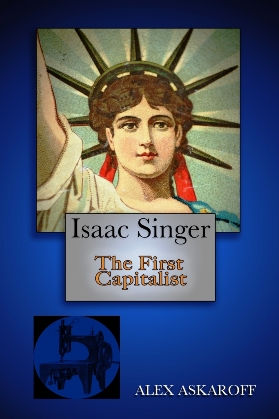
Most of us know the name Singer but few are aware of
his amazing life story, his rags to riches journey from a little runaway
to one of the richest men of his age. The story of Isaac Merritt Singer
will blow your mind, his wives and lovers his castles and palaces all
built on the back of one of the greatest inventions of the 19th century.
For the first time the most complete story of a forgotten giant is
brought to you by Alex Askaroff. |
|||
|
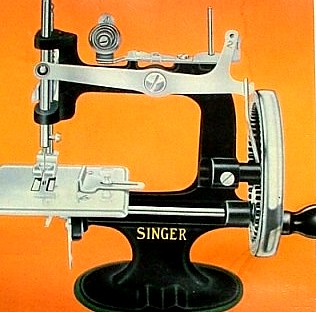
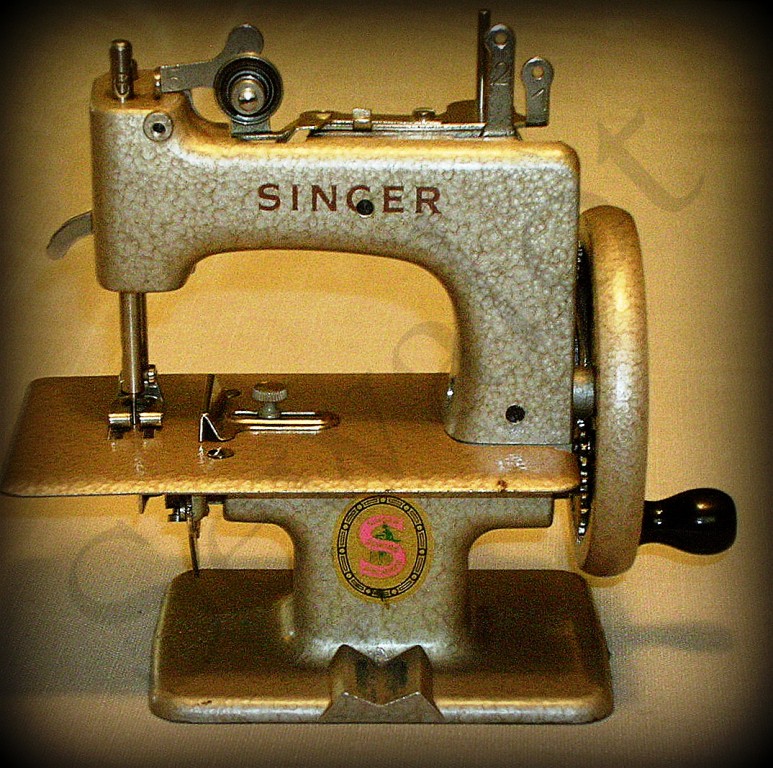
Singer model 20 1910-1975
The most popular toy sewing machine ever made
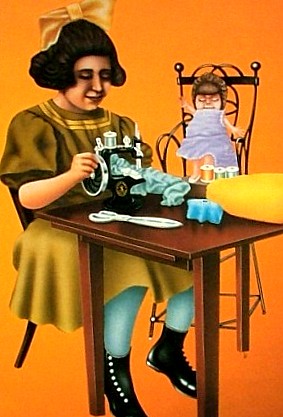
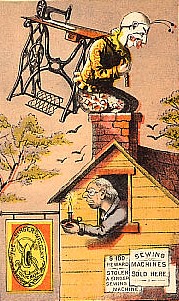
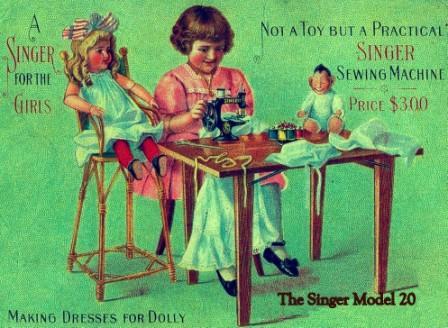
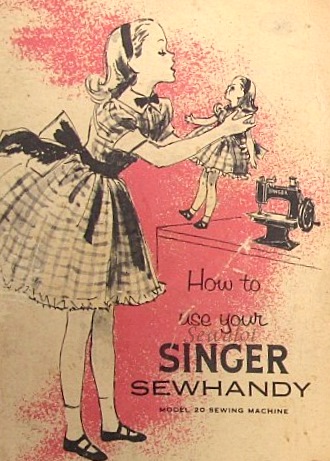
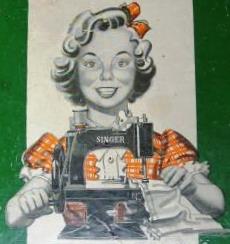
The most successful toy sewing machine ever produced was the Singer 20 sewing machine, known later as the Singer Sewhandy. Now that's a pretty impressive statement-but true. The picture above is pre First World War, note the four spoke hand wheel, yours for $3. Looks a little weird having a head floating in the machine! The machine ran from around 1910 until the 1970’s with virtually no change to the basic engineering.
Now before you start saying that the Singer 20 toy sewing machine faded away in the 1950’s, Singer resurrected the model in the late 1970’s for a short period.
See Alex Askaroff on Youtube http://www.youtube.com/watch?v=8-NVWFkm0sA&list=UL These models were manufactured in Turkey by Singer and are original Singer toy sewing machines built to a high specification. These models are now highly collectible because of the limited numbers and were simply called Singer k20 rather than Singer 20k.
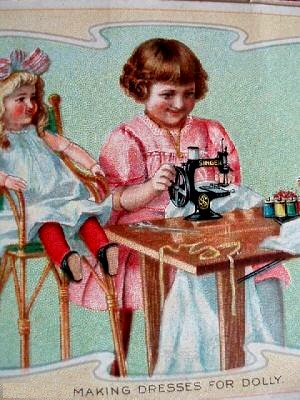
The Singer model 20 was made at the Elizabeth factory in New Jersey, USA, and was originally sold as a toy. First appearing around 1910 some 60 years after Isaac Merritt Singer founded the great Singer Manufacturing Company. The model 20 was the 20th unique singer after Isaac Singers patent model No1, patented in 1851. Early Singer toy sewing machines were clearly aimed at the child market however later Singer toy sewing machines were sold as adult light portable machines as well as toys. This was probably to gain a foothold into the larger market of full-sized machines.
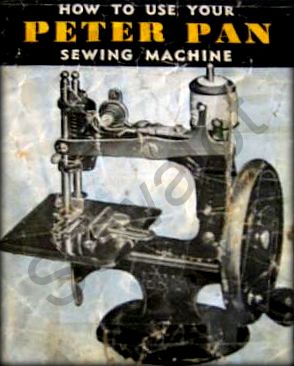
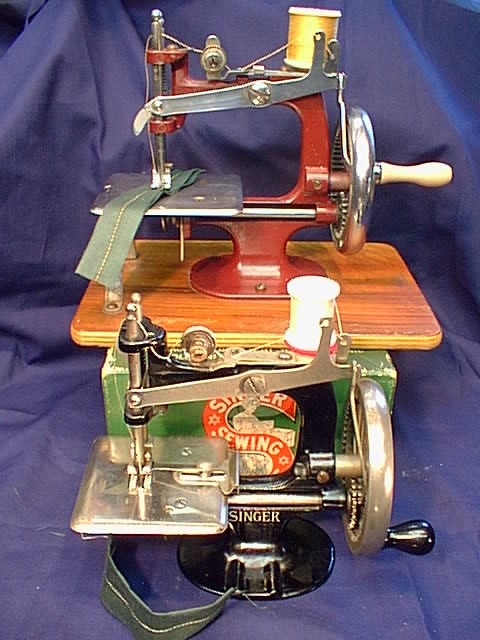
The Singer 20 toy sewing machine produces a simple chain stitch. Over the years as patents ran out the Singer 20 toy sewing machine was one of the most widely copied of all small toy sewing machines. The well-made cast iron toy sewing machine was durable, long lasting and has become prized among collectors world-wide, especially the different coloured models. The Peter Pan sewing machine
This is the Singer 20 copy made by Colton, Palmer & Preston in Southwark, Australia.
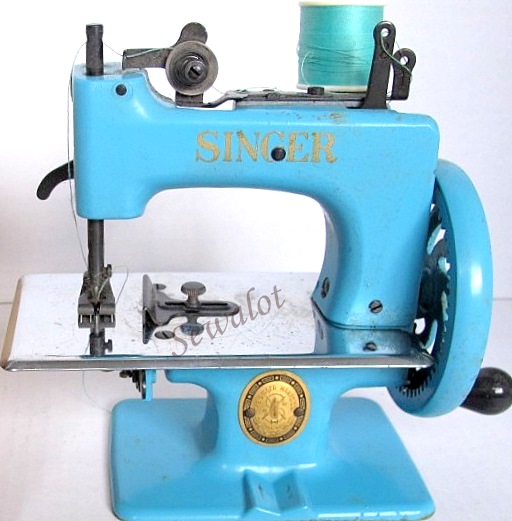
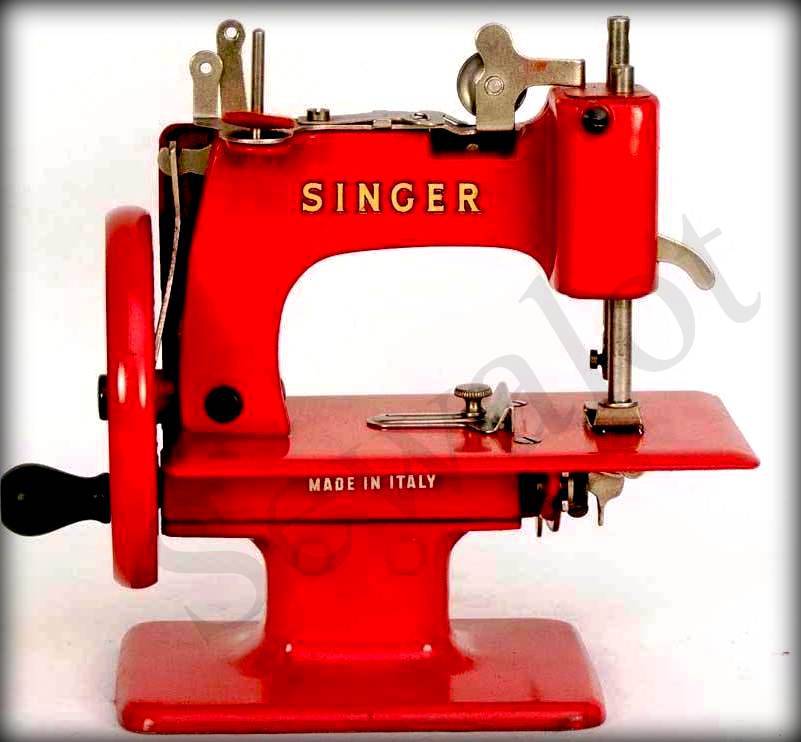
The most desirable of the Singer toy sewing machines were once the brightly coloured ones especially blue and red. The value of these has dropped considerably as it has become clear that people are now re-spraying black models. Naughty boys! The next seems to be the early 1910 Singer toy sewing machine model which had a four-spoked hand-wheel. By the outbreak of The Great War in 1914 Singer 20 sewing machines had eight-spoked hand-wheels. Not a toy but a practical Singer Sewing machine
From 1920 to 1950 there were minor modifications to the Singer toy sewing machines such as the adding of threading numbers stamped on the machine in 1926. In the 1950’s the fourth major change took place enclosing many of the moving parts and from then on the Singer toy sewing machines looking real chunky.
The boxes & cases varied over the years and there were as many as 22 different styles of the Singer 20 toy sewing machines.
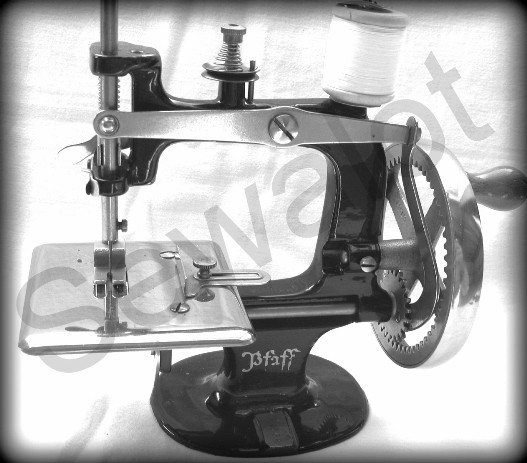
The chunky 1950's Singer toy sewing machine was known as the singer 20-10 and is at the moment the best priced Singer toy sewing machine to collect so don’t miss one they are as cheap as chips today but tomorrow they may go ballistic. Also there are no collectible toys made today as they nearly all contain plastic (which we all know falls apart) so these little beauties are the last truly collectible sewing machines that we will see until someone makes them out of real materials again. A Pfaff toy copying the Singer once again.
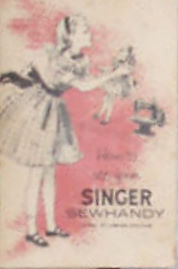
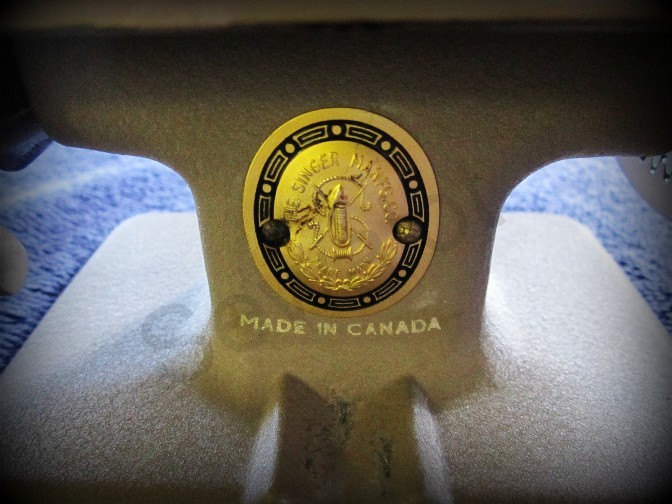
The Singer Sewhandy During the 1950's Singer replaced its popular toy model with the updated and chunky Singer Sewhandy. The Singer Sewhandy proved popular for another 20 years and came in standard black. However there were also rare red, beige, and super-rare blue models. Some of these go for silly prices on Ebay. Fake, Fake! Be very careful when you buy some of these toy sewing machines as I have been made aware of re-sprayed or repainted Singer machines coming onto the market recently. We are not talking about old genuine machines but old common machines painted in far rarer colours, modern re-sprays! The Singer toys were copied by many manufacturers and if they have been repainted with Singer decals added it is hard to spot the difference. Make sure (as much as you can) the machine you are bidding on has all the genuine decals. The MADE IN is a good pointer as many fakers do not bother with them (annoyingly some genuine machines never had them on anyway so it's not foolproof). Genuine machines always carry a few marks showing their age and are always in the basic Singer colours. Take your time and ask questions about how long the seller has owned the machine. If you are not sure don't bid. Look for positive feedback and if you are disappointed return the machine for a refund.
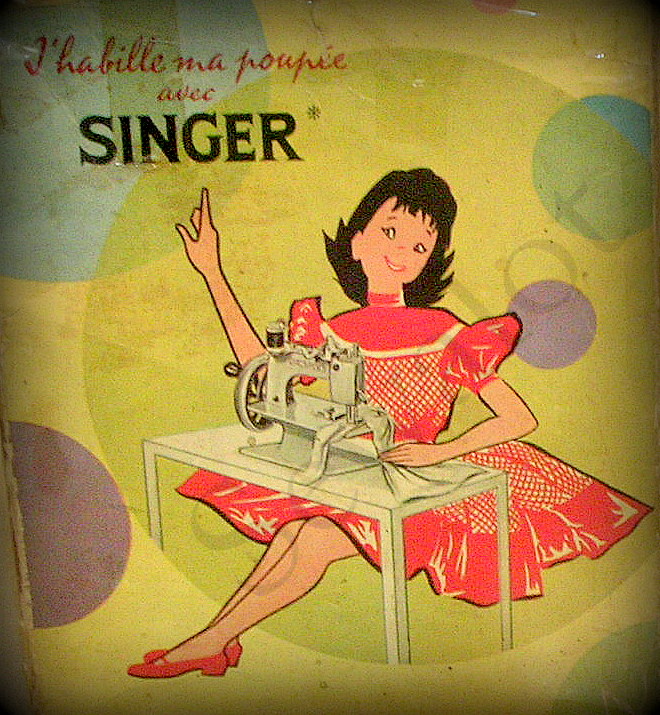
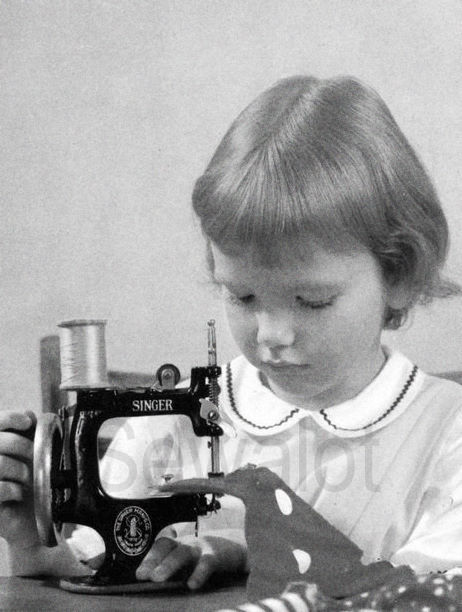
There is no doubt from the emails that I get that the Singer model 20 was many children's first practical experience of a sewing machine. Its strong construction and easy use has put thousands of women onto a path of happy sewing. There are some nice emails below, do take a second to read them.
News
Flash! Alex's books are now all available to download or
buy as paperback on Amazon worldwide.
|
||||
|
Most of us know the name Singer but few are aware of his amazing life story, his rags to riches journey from a little runaway to one of the richest men of his age. The story of Isaac Merritt Singer will blow your mind, his wives and lovers his castles and palaces all built on the back of one of the greatest inventions of the 19th century. For the first time the most complete story of a forgotten giant is brought to you by Alex Askaroff. News Flash! Alex's books are now all available to download or buy as paperback on Amazon worldwide.
"This
may just be the best book I've ever read."
"My five grandchildren are
reading this book aloud to each other from my Kindle every Sunday.
The way it's written you can just imagine walking
beside him seeing the things he does. News Flash! Alex's books are now all available to download or buy as paperback on Amazon worldwide. Fancy a funny FREE read: Ena Wilf & The One-Armed Machinist
Hi Alex,
I loved your site. It brought back many fond memories of my
youth.
My father and his entire family worked for the Singer Co. in
Elizabeth, NJ starting in 1901. My dad was a tool and die
maker. About 1950 (I was 6 then) he bought my mother a cabinet
model, which I still own
and
he also
came
home with a
toy Singer
for me.
When Mom sewed, my Singer was clamped
next to her
to the right side of the fold out top-
cabinet, so we sewed together. I literally learned to sew at my
mother's knee.
I
still
have my father's walnut tool chest and every time I open the lid, I
can
still
smell the familiar
smell of oil.
Thanks for the memories,
Joan K
USA
Dear Alex
Well that's it, I do hope you enjoyed my work and happy collecting. I spend countless hours researching and writing these pages and I love to hear from people so drop me a line and let me know what you thought: alexsussex@aol.com
|
||||
|
|
|
|||
CONTACT: alexsussex@aol.com Copyright © |
||||