|
|||||
|
|
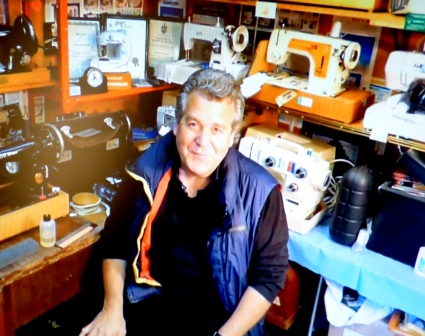
Alex has spent a lifetime in the sewing industry and is considered one of the foremost experts of pioneering machines and their inventors. He has written extensively for trade magazines, radio, television, books and publications world wide.
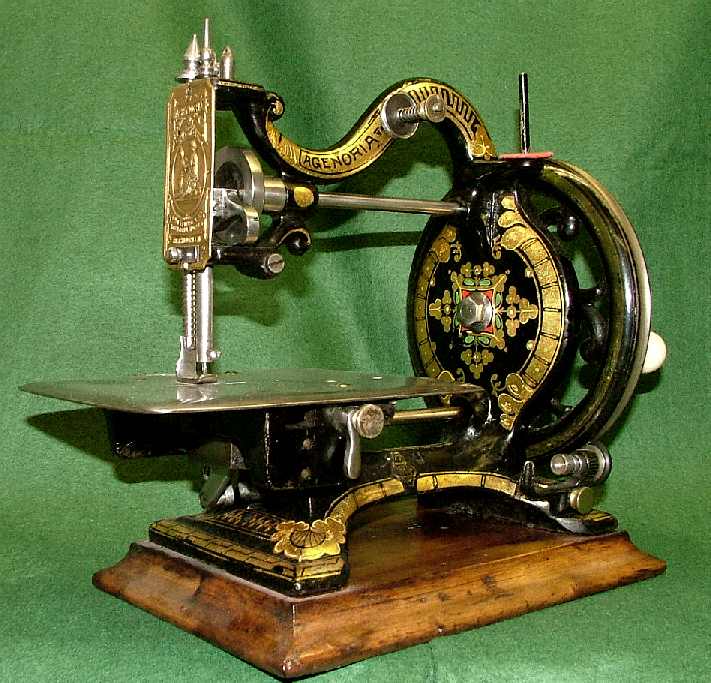
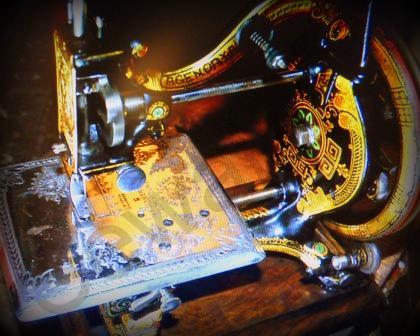
The most beautiful sewing machine in the world!
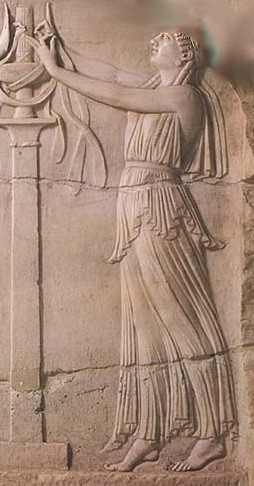
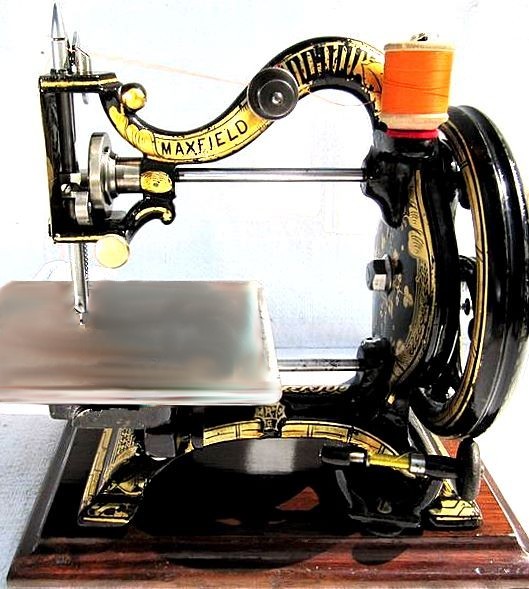
Considered by many as one of the most beautiful sewing machines ever made. Agenoria or Agenora was the Roman Goddess of Silence and Industry giving relief from pain and anxiety. She was a popular goddess among the industrious
Romans and also the protector of
The
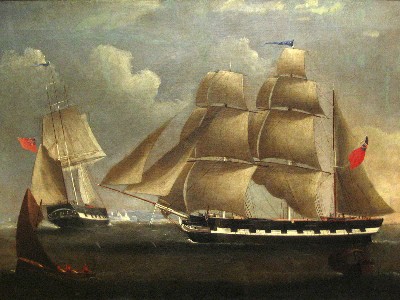
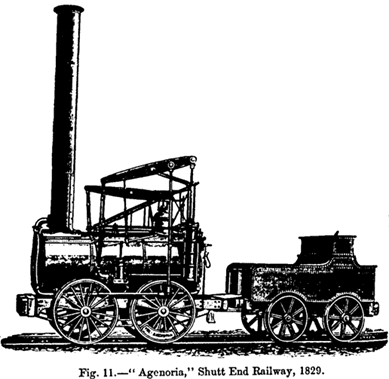
goddess has inspired many people over the centuries with ships, steam
engines and many others being named after her.
Now, researching the Agenoria was no simple task. I first fell in love with the stunning machine when I bought a near perfect example from Maggie Snell some 25 years ago. The machine was a balance of beauty and functionality. She was made not only to do a job but look fantastic while doing it. Unfortunately there were several firms that made the Agenoria which makes research tricky. Possibly one of the prized possessions of the failing companies the plans and tools passed to several businesses and the names of the partners who made the Agenoria changed several times. There were seven main culprits or rather businesses involved and many more directors and investors in the complex life of the Agenoria. The main ones were Maxfield, Harris, Franklin, Fowke, Cole, Imperial and Royal. The person who turns up most was an ex-employee of the sewing machine pioneer Newton Wilson, one Arthur Isaac Maxfield.
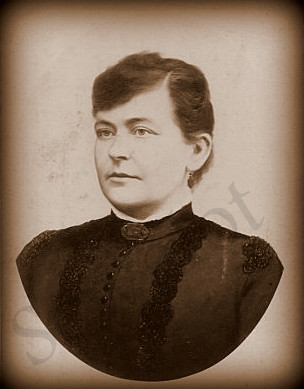
Arthur Isaac Maxfield's family
On
the 1871 census records
Now, back to the beautiful Agenoria sewing machine.
It was designed in the
middle of the
1860’s when beauty and practicality went hand in hand The Victorian
Agenoria has often been called the most beautiful sewing machine ever
made.
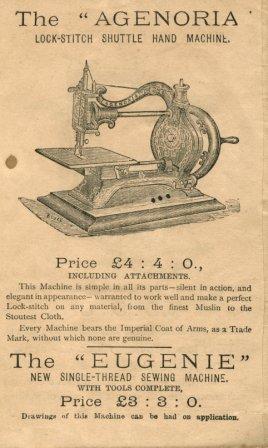
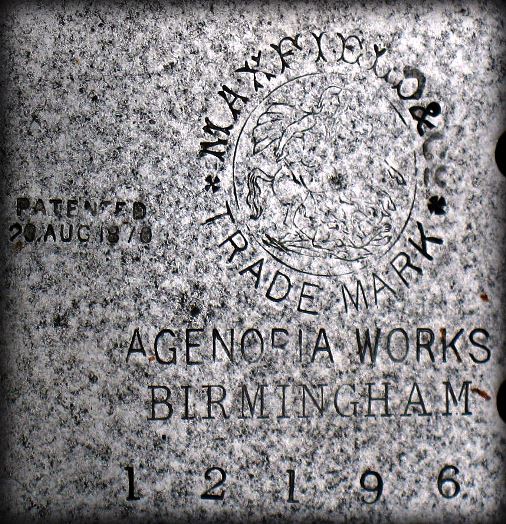
The superb sewing machine design was born in 1867 and first registered in 1869 and the shuttle movement patented on Aug 20th 1870. The Agenoria sewing machine was originally manufactured by Arthur Isaac Maxfield at his Agenoria works in Birmingham In fact they actually advertised the machine as the Patent Loose Wheeled Model. The
first models went on sale for the princely sum of £4. 4s. (Four pounds
and four shillings) around two months average wages in 1870! Wow can you
imagine paying that today for a sewing machine. It just goes to show how
important they were. Maxfield Patent 2301, 20th August 1870, shuttle motion. Arthur The Franklin, Maxfield, Royal, Imperial and Harris companies all had a hand in manufacture so lets look at the facts.
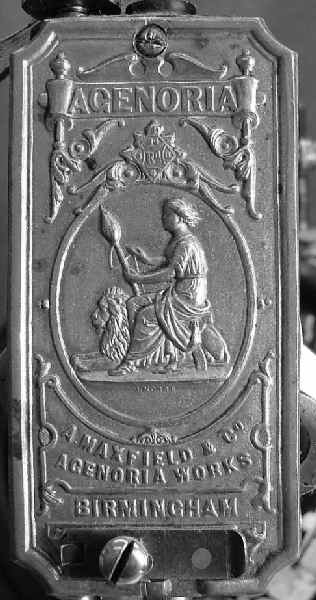
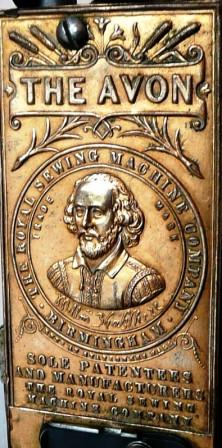
On the brass needlebar cover was a Registered Design lozenge for 24th February 1869 (just beneath the machine's name). Below that is an image of the Goddess Agenoria herself sitting beside a lion while quietly working. I can't see anyone doing that really. I would run a mile. I suppose the God's are different! 20 August 1870
Maxfield's trade mark of George and the Dragon on the
needleplate and later on the brass head plates. The images show St
George riding astride a stallion with a sword stabbing at a writhing
fire-breathing dragon below and was on all early
Maxfield machines. This was to cause trouble
later with Newton Wilson who used a similar mark.
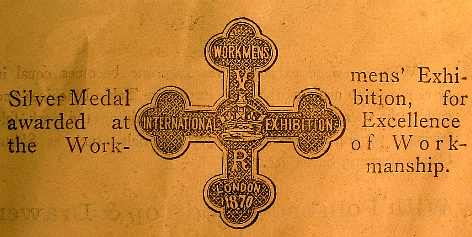
The brass end-plate showing the Goddess Agenoria On its launch in Britain the Agenoria machine was an instant success winning the silver medal of excellence at the International London Exhibition of 1870. Also the Working Men's Exhibition. But who was making it?
The earliest names I have found so far are
The best and most
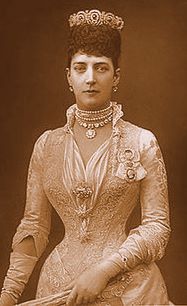
perfect machine for the colonies The Agenoria continued gaining popularity and a special silver plated model was presented to Her Royal Highness the Princess of Wales. She loved the machine and later gave her seal of approval to the Agenoria. The Agenoria then became by Royal Appointment. Ayr & Cooper agricultural show medal winners Copies
of these silver plated models were sold for £6. 6s. The attachments were
silver plated on all m
Winners of the silver medal in 1870
Maxfield Visits the Queen Family legend tells that at the height of Arthur's success he was summoned by the Princess of Wales to Buckingham Palace. The Princess of Wales was the daughter of King Christian IX of Denmark. She married Albert Edward, Prince of Wales, and became Princess of Wales on 10 March 1863. On 22 January 1901 Albert became King Edward VII and she became queen consort after 37 wait. Queen Alexandra died 20 November 1925.
Around 1870 Princess Alexandra invited Arthur Isaac Maxfield to Buckingham Palace to demonstrate his award winning sewing machine. Arthur travelled down from Birmingham with his daughter, Mary, to the Palace. Family legend tells that while at the Palace Queen Victoria showed an interest in Maxfield's machine and was given a demonstration of it by Mary. After the successful visit to the Palace, Princess Alexandra, The Princess of Wales gave her seal of approval to Arthur Maxfield's sewing machine and from then on his machines were clearly marked with royal approval. It was a wonderful boost for business and Birmingham as a city.
A Sewing Machine
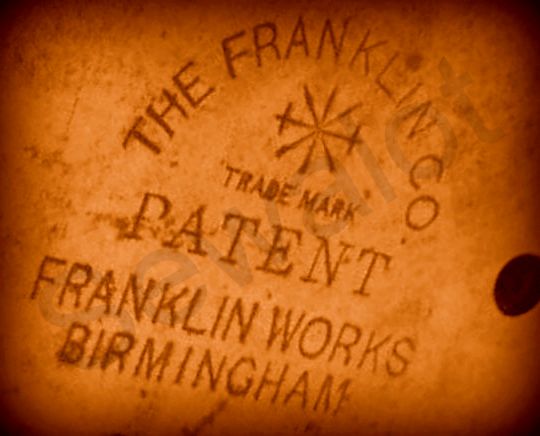
for a Princess Things turn sour Maxfield must have run into financial problems or been offered a price he could not refuse for as I mentioned earlier he became involved, with his baby the Agenoria, with The Franklin Sewing Machine Company of Park Road, Soho, Birmingham with new partners. Minor changes to the casting appeared around this time which means he may have had to leave some of his foundry tools behind and start afresh. Maxfield’s machine was made at the Franklin Works, Birmingham, England.
Engraved on the cloth plate during this period was the company trade mark, a bobbin with three crossed needles with The Franklin Co around it.
Cole also traded out of premises at 104 Princess Street Edinburgh and Glasgow. By December 1876 Cole's business was wound up.
As usual I am jumping all over the place so keep up! By 1873 old
Maxfield was on the run again. I have images of him scurrying along a
cold Birmingham street with his family and his only treasure, h Maxfield then set up at his New Street Works, still in Birmingham. What happened between Fowke's and Maxfield is unknown but more was to follow. During this period when Maxfield sold the machines under his own name the main arm of the machine bore the Maxfield name not the Agenoria. So there is really a Maxfield machine in its own right. Well in name anyway.
Also in 1873 a partnership was formed between Charles Fowke, John Judson and Joseph Harris. The company was called the Imperial Sewing Machine Company, Park Road, Birmingham. The premises was the same as the previous partners traded from. But no mention of Maxfield? Was he finally bought out? Whether the Franklin company, under Fowke and Maxfield, was still stumbling on during this period, or they had already sold out to the expanding Judson & Harris is unknown.
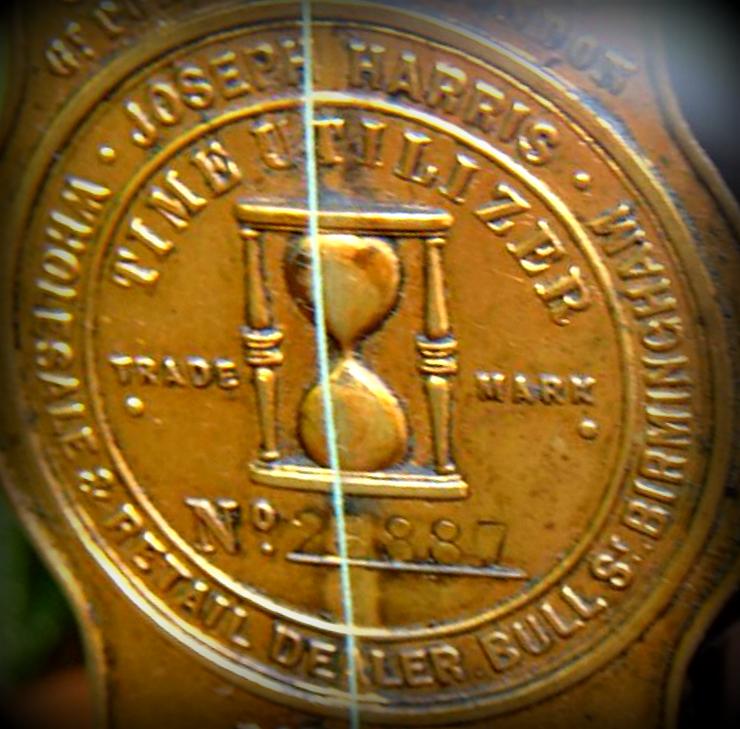
Joseph Harris
What we do know is that in
1875 The Franklin Sewing Machine Co was properly
taken over by Joseph Harris
& Co who continued to produce the superb Agenoria
under a renamed company (the Imperial Sewing Machine Co).
The Imperial
Sewing Machine Company Joseph
Harris did not have the Agenoria for long and their offices and
showrooms at Oriel House, 41 Bull Street Birmingham soon stopped selling
the model. Incidentally they also made the Challenge sewing machine. Now back to
So what is going on now? Franklin stamped Agenoria's are the most likely to turn up and so I assume that during the Franklin connection most Agenoria's were made. Funnily the few Imperial and Fowke Agenoria sewing machines that do turn up have two bobbin winders. I wonder why? Probably just an advertising gimmick, if one breaks just carry on with the other... On the main bed they were clearly marked C Fowke, Franklin Works, or Imperial Sewing Machine Co. Agenoria were sold through agents like Hay & Shaw of Soho, London.
Finally. Praise the Lord we get to the Royal Sewing Machine Company.
I have more history on the Royal Sewing Machine Company here. The Royal Sewing Machine Co was formed by Thomas Shakespear (no e on the end) & George Illiston in 1868.
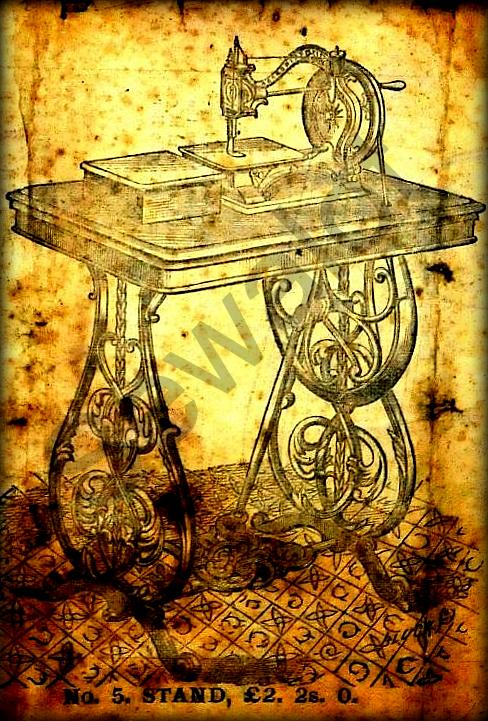
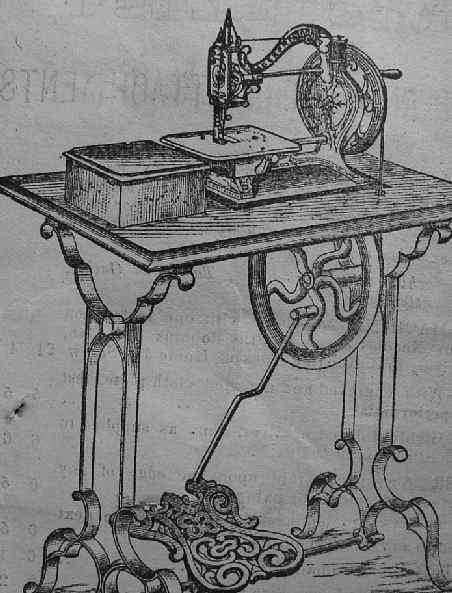
The Agenoria machine was sold with several different treadles Their
factory was at
T. Norton &
Company
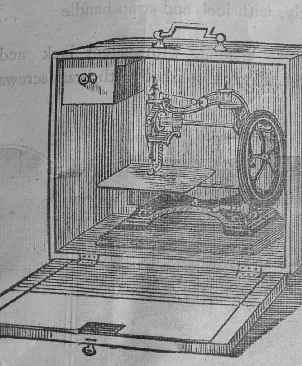
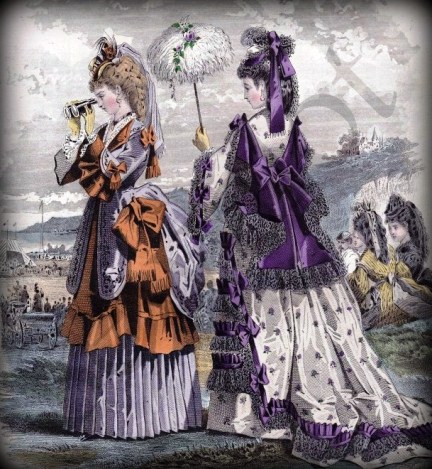
Boxes were pine or walnut depending on the price Tracing the roots of your Agenoria can be tricky but I would look at the side plate and needle or stitch plate and look for the makers name. Here you will find a host of information sometimes dealers also stamped their mark. The plates may be marked anything from Maxfield to Franklin to Harris & Judson to Imperial or Royal Sewing Machine Co. These marks are the best way to identify its age but in reality many of the machines came out of the same premises over a 10 year period, just under different ownership. When the Agenoria was being made this was the high-fashion of the period
The Royal Sewing Machine company, out paced by the giants such as Singer and Jones, finally ceased trading in 1888. Their beautiful but out-dated machines were too expensive and old-fashioned. The
collapse of The Royal Sewing Machine Company made little news at the time as all the
papers were focused on the brutish murders in Whitechapel by the
infamous Jack the Ripper. While
the weird and wonderful history of the Agenoria may have faded into
the distant past the
companies left behind a legacy
of some of
the most beautiful sewing machines of all time. Some say
that Arthur Isaac Maxfield went down to London to start another sewing
machine firm called Maxfield & Co in Islington. One of his son's
John Maxfield became a senior director dying of a heart attack in 1918
after severe pneumonia. |
||||
|
News Flash!
Most of us know the name Singer but few are aware of his amazing life story, his rags to riches journey from a little runaway to one of the richest men of his age. The story of Isaac Merritt Singer will blow your mind, his wives and lovers his castles and palaces all built on the back of one of the greatest inventions of the 19th century. For the first time the most complete story of a forgotten giant is brought to you by Alex Askaroff.
All my latest books are now available all over the world on Amazon CONTACT: alexsussex@aol.com
Hi
Arthur Isaac Maxfield was an ancestor of mine, his daughter Betsy Eleanor Maxfield married Joseph Meider who was from my Grandmother's family. I have spoken with the daughter of Joseph and Betsy who told me about the Maxfield connection and I was delighted to see the beautiful sewing machine that Arthur Maxfield invented on your site. She also told me that she was related to Otto Goldschmidt through her
Mother's family. He was married to Jenny Lind the opera singer.
I have almost made the connection but
have not quite been able. I would be grateful if you can shed any light on this. My grandmothers family were tailors so sewing machines played a bit part in their lives. Susan Santoro. susan.santoro@sky.com
Hello from Toronto, Canada.
Hi Alex,
Alex,
Hi Alex!
|
|||||
|
|
|
|
|||