|
Home of the Sewalot Site
For antique and vintage sewing machines Sewing machine Tension Problems sorted in a heartbeat! Sewalot Index
Alex has spent a lifetime in the sewing industry and is considered one of the foremost experts of pioneering machines and their inventors. He has written extensively for trade magazines, radio, television, books and publications worldwide.
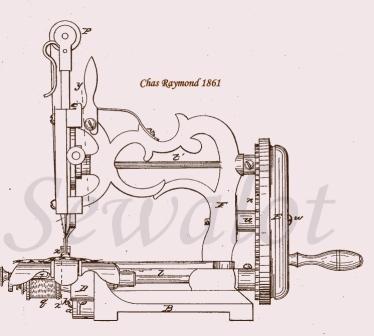
Chas Raymond
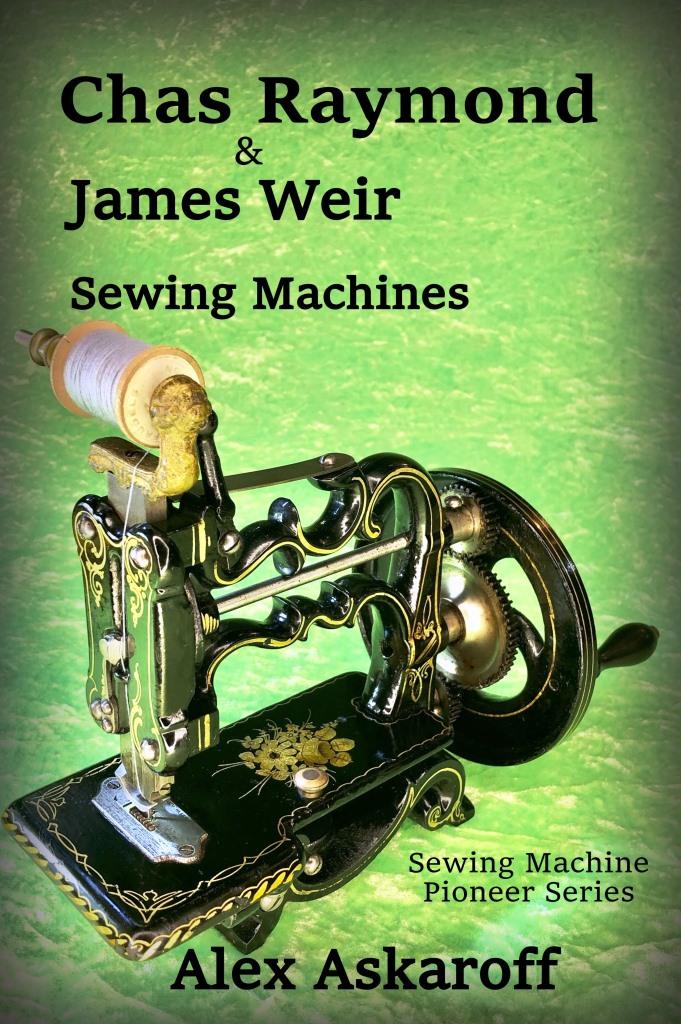
By Sewing Machine Pioneers series Charles Raymond and James Galloway Weir, were two of the fascinating early Sewing Machine Pioneers. Both became phenomenally wealthy, on different continents, from the same sewing machine! Their business flare and innovation was centered around one of the most sought after and collected 19th Century sewing machines. Once friends, the bitter business rivals did battle along the high streets of Europe, as each tried to dominate their trade. Here, for the first time, is the extraordinary story of these two pioneers, brought to you by world renowned author Alex Askaroff. Alex is the writer of the hugely popular Sewing Machine Pioneer Series. He has had Seven No1 New releases on Amazon and is considered one of the foremost experts in his field. Out Now! Amazon No 1 New Release Nov 2020
Most of us know the name Singer but few are aware of his amazing life story, his rags to riches journey from a little runaway to one of the richest men of his age. The story of Isaac Merritt Singer will blow your mind, his wives and lovers his castles and palaces all built on the back of one of the greatest inventions of the 19th century. For the first time the most complete story of a forgotten giant is brought to you by Alex Askaroff. Sewalot & Alex Askaroff present an early sewing machine, pre American Civil War. - YouTube This is a link to an early Raymond Walking Foot machine with a clever automatic tension device made in Brattleboro.
James Galloway Weir
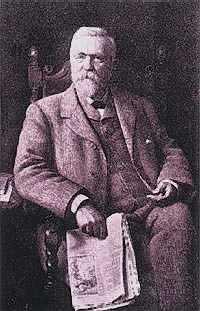
J G Weir 1839-1911
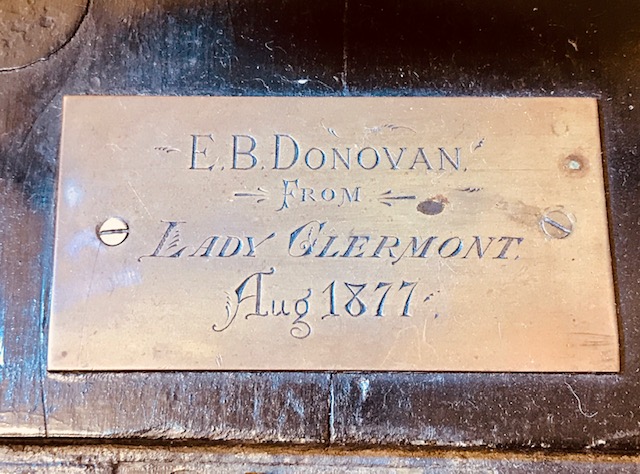
To E B Donovan
from Lady Clermont 1877
James Weir
The Lady's hand
chain stitch sewing machine,
P. Frank Beware all counterfeits...
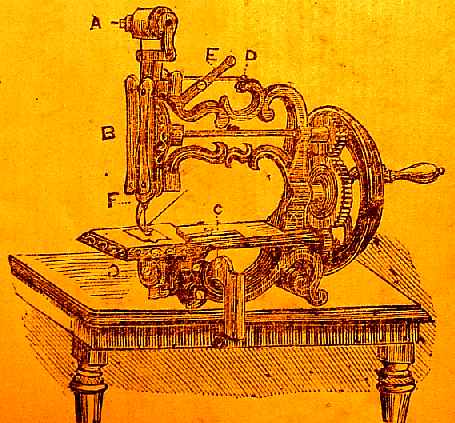
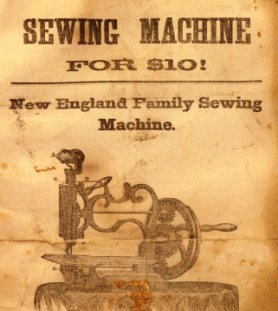
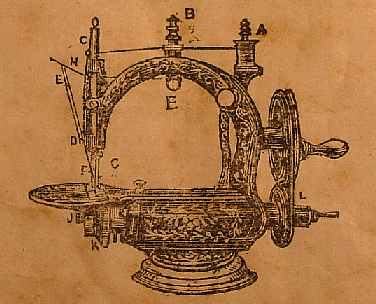
Although the machines Weir imported from Raymond were Canadian, they were pretty much identical to the bestselling New England American models of the time and so Weir also called his model the American Hand Machine and New American Hand Machine, made in Canada.
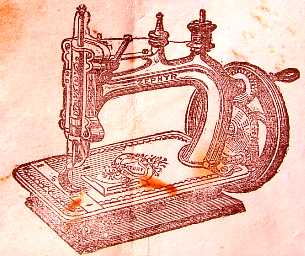
Highbury Sewing Machine Co The Raymond Lock-stitch sewing machine
James G Weir was know as Galloway Weir in Parliament probably to accentuate his Scottish roots 6/07/1839- 18/05/1911 Weir Sewing Machine Values Raymond Sewing Machine Values Out Now! Amazon No 1 New Release Nov 2020 Weir/Raymond machines vary in value but they always fetch good prices. I have seen nice models go for over $1500. The machines can only get older and rarer. Remember condition is everything a car in a scrap yard is only scrap whatever it cost new! OUT NOW!
Most of us know the name Singer but few are aware of his amazing life story, his rags to riches journey from a little runaway to one of the richest men of his age. The story of Isaac Merritt Singer will blow your mind, his wives and lovers his castles and palaces all built on the back of one of the greatest inventions of the 19th century. For the first time the most complete story of a forgotten giant is brought to you by Alex Askaroff. News Flash! Alex's books are now all available to download or buy as paperback on Amazon worldwide.
"This
may just be the best book I've ever read."
"My five grandchildren are
reading this book aloud to each other from my Kindle every Sunday.
The way it's written you can just imagine walking
beside him seeing the things he does. News Flash! Alex's books are now all available to download or buy as paperback on Amazon worldwide.
James G Weir was know as Galloway Weir in Parliament probably to accentuate his Scottish roots 6/07/1839- 18/05/1911 Weir Sewing Machine Values Raymond Sewing Machine Values Weir/Raymond machines vary in value but they always fetch good prices. I have seen nice models go for over $1500. The machines can only get older and rarer. Remember condition is everything a car in a scrap yard is only scrap whatever it cost new! I go into far more detail on Weir sewing machine values in my book. OUT NOW!
Most of us know the name Singer but few are aware of his amazing life story, his rags to riches journey from a little runaway to one of the richest men of his age. The story of Isaac Merritt Singer will blow your mind, his wives and lovers his castles and palaces all built on the back of one of the greatest inventions of the 19th century. For the first time the most complete story of a forgotten giant is brought to you by Alex Askaroff. News Flash! Alex's books are now all available to download or buy as paperback on Amazon worldwide.
"This
may just be the best book I've ever read."
"My five grandchildren are
reading this book aloud to each other from my Kindle every Sunday.
The way it's written you can just imagine walking
beside him seeing the things he does. News Flash! Alex's books are now all available to download or buy as paperback on Amazon worldwide.
V H
Seeling
'La Favorite Des
Dames'
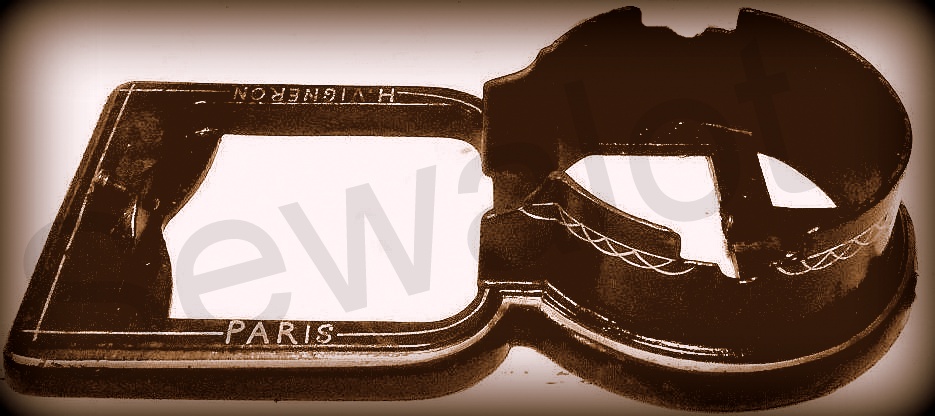
Compagnie Francaise des machines a coudre Vigneron
Whight & Mann The same year Weir launched the Zephyr (£4.4s) and the Argus sewing machines. He now had a formidable range but it was his little 55 shilling dream machine that still sold like hot cakes.
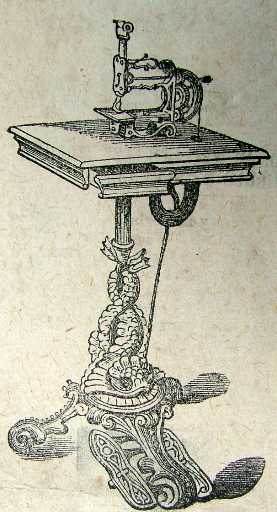
The 55 shilling Raymond Weir
***** It was a time of great change in the World. Let me tell you a little about the period. America was still rebuilding after its bloody civil war but, union and expansion was explosive. Queen Victoria sat on her throne at her Palace in London as the most powerful leader our planet had ever known. Her dominions stretched to the Four Corners of the Earth and she ruled two thirds of the Globe. In truth the sun never set upon her empire. The last great Indian war was started in America by the Red Indian Shaman, Paiute, whose ghost dance would free them from the Paleface. In December 1890 it ended with their terrible destruction at Wounded Knee Creek. On a more positive note Aspirin (what a relief!) was discovered and so were the first x-rays. The independent Labour party was founded and Britain took control of Hong Kong only to have to give it back a 100 years later.
In New Zealand women were allowed to vote, the first nation to do so. So who thought of that great idea! Only kidding girls. Eiffel built his famous tower in the centre of Paris, and later used his technique to make a frame for Bartholdi's Statue of Liberty modelled on Singers French wife, Isabella, a French actress considered one of the most beautiful women in Europe at the time. Doesn't it always amaze you how these old men with money attract such beautiful women, true love of course! The AC electric motor was invented and Gillette found out how to make a razor that did not cut you to ribbons. George Bernard Shaw was beginning his novels such as Antony & Cleopatra and Pygmalion at the same time as the zip was invented. Oscar Wilde was putting the finishing touches to his work, the importance of being earnest while staying at the Savoy Hotel owned by my Great Grandfathers new wife, Helen D'Oyle Carte. And finally Edison was sorting out how to put moving pictures onto a screen. Watching paper pictures skip round inspired many, especially popular was what the maid saw through the keyhole!
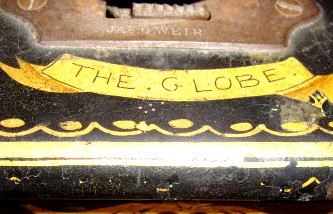
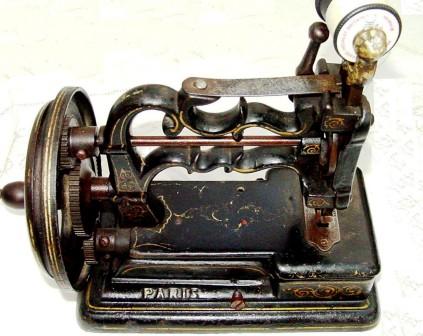
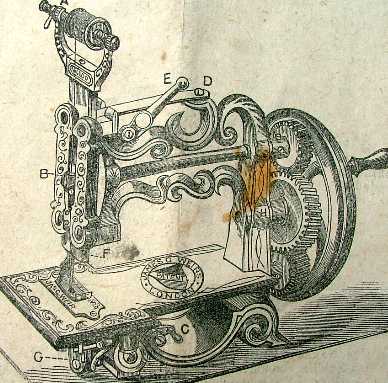
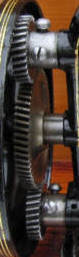
No Weir was genuine without his bed-stamp, notice the later cross-cut gears for smoothness.
The Illustrated London Almanac
1871
Weir Zephyr lock stitch sewing machine
The virtually unknown Weir Zephyr lock stitch sewing machine
Machines ready for shipment to the colonies
Weir Improvements
A woodcut of the super rare Weir Victoria very similar to the Taylor Twisted Loop but supplied by William Jackson of London.
The last machine, a super-rare but plain Weir Argus Lockstitch I have just one in my Sewalot Collection. £4,4s, treadle base 30s more.
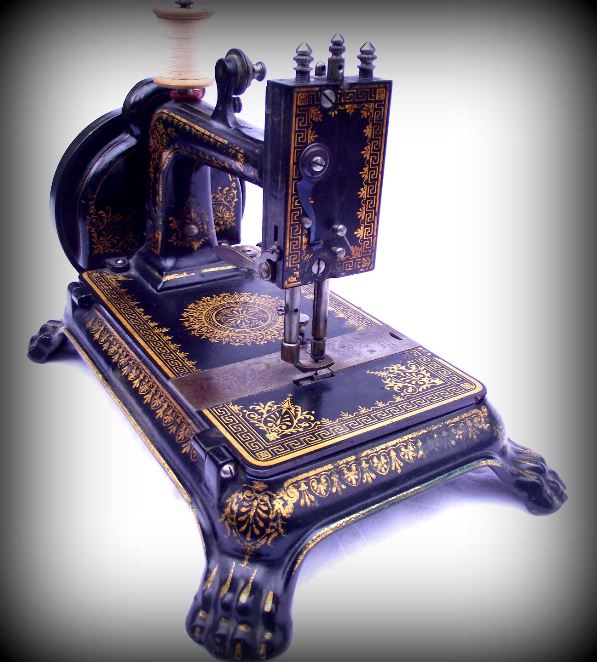
And here is the real thing a super rare Weir Improved Argus in stunning condition. Weir imported most of his machines and the most likely maker of this beauty is the German company Bottcher of Berlin. ***** This is a bit off topic but connected with Weir's Argus. The American Sewing Machine Company was founded by E.Todd in 1863. They were trading out of Ludgate Square in London and imported models from all over the world. I have seen there badge on Canadian, American, German and Swedish machines. The Husqvarna Freja was a Todd-American Sewing Machine Co import. Stories go that they had strong ties with the Southern Confederacy during the American Civil war and stamped the seven stars on there machine plates as support for the Confederate States, just a story. ***** Now back to the relevance of all this and the Argus sewing machine. Some experts say that the Weir Argus was a German import from Bottcher in Berlin. However the similarity to the American New Home models of the same period is startling, especially New Home’s Nelson model. We know he was importing from America and to top it all if I look closely on my model, in the right light, underneath the gold, you can just see the name Nelson across the machine! I bought my Argus from a dress shop where it was on display. It took a month of bargaining for them to let me have it but my persistence eventually paid off. It is the only Weir Argus sewing machines to have surfaced so far! Although I know of a couple of Todd-Nelson's which are obviously from the same manufacturer. German or American it is impressive. Where is my time machine when I need it!
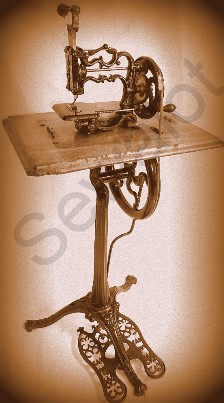
A stunning treadle Weir. Makes me dribble just looking at it!
Sewing Machine Manufacturer to Her most gracious Majesty the
Queen.
James G Weir was know as Galloway Weir in Parliament probably to accentuate his Scottish roots 6/07/1839- 18/05/1911 Weir Sewing Machine Values Raymond Sewing Machine Values Weir/Raymond machines vary in value but they always fetch good prices. I have seen nice models go for over $1500. The machines can only get older and rarer. Remember condition is everything a car in a scrap yard is only scrap whatever it cost new! OUT NOW!
Most of us know the name Singer but few are aware of his amazing life story, his rags to riches journey from a little runaway to one of the richest men of his age. The story of Isaac Merritt Singer will blow your mind, his wives and lovers his castles and palaces all built on the back of one of the greatest inventions of the 19th century. For the first time the most complete story of a forgotten giant is brought to you by Alex Askaroff. News Flash! Alex's books are now all available to download or buy as paperback on Amazon worldwide.
"This
may just be the best book I've ever read."
"My five grandchildren are
reading this book aloud to each other from my Kindle every Sunday.
The way it's written you can just imagine walking
beside him seeing the things he does. News Flash! Alex's books are now all available to download or buy as paperback on Amazon worldwide. Please do let me know what you thought of my efforts: alexsussex@aol.com Main Sewalot site index: Index
Many moons
ago I bumped into the wife of Andrew McLaren Winterborn (J G
Weir's grandson). I had the pleasure to visit Frances Winterborn
who had called me out to service her sewing machine in St
Leonards, East Sussex. In her living room was an oil painting of
a grand old man that looked so familiar. I kept staring at it
but could not fathom why it felt like I should know him. When I
asked who it was I was amazed to be confronted with one sewing
histories giants, none other than James Weir himself. I promptly
got my camera from the car to take a picture of the oil
painting. My name is Mandie Raymond, and my husband and I
were recently in an antique store near our home in Clarkston,
Michigan, and ran across a "New Raymond" sewing machine.
Obviously with the tie to my husbands last name, we jumped to
buy this machine. Thanks to the help of your site, we were able
to learn the history behind the machine, and place a
guesstimated age on the machine of 1895. Thanks for your
time and effort
that you have put into this site. Have a
Great Day! Hi Hi Alex Alex, Hello Alex, Our
researcher just came across your article on Charles Raymond.
It’s timely for us because, as the historical cemetery in
Guelph, his monument is within our grounds. It is a magnificent
family lot with a fence around it, as was the style in those
days. We are gathering information on the family and the lot in
an attempt to preserve the fence. Some suggestion has been made
to have it removed. We are putting information together on the
family to ensure the historical value of the lot is recognized,
even if it is in bad condition, We believe it would be worth
fund raising to preserve it. In the photo, it actually doesn’t
look too bad, but we will not repair unless it is in the same
format as originally used when the fence was made, and that
makes it a little more difficult. Thought you might like to know
that your interesting article is being put to use. |