|
||||
|
|
Alex has spent a lifetime in the sewing industry and is considered one of the foremost experts of pioneering machines and their inventors. He has written extensively for trade magazines, radio, television, books and publications world wide.
See Alex Askaroff demonstrating antique sewing machines on YouTube http://www.youtube.com/watch?v=8-NVWFkm0sA&list=UL
Most of us know the name Singer but few are aware of his amazing life story, his rags to riches journey from a little runaway to one of the richest men of his age. The story of Isaac Merritt Singer will blow your mind, his wives and lovers his castles and palaces all built on the back of one of the greatest inventions of the 19th century. For the first time the most complete story of a forgotten giant is brought to you by Alex Askaroff. |
|||
|
London 1874-1914
Atlas was the Greek god that held the world on his shoulders. I think we all know what that feels like sometimes! The strength and reliability of Atlas meant it was the perfect name for a sewing machine.
Although the Atlas Sewing
Machine Company of
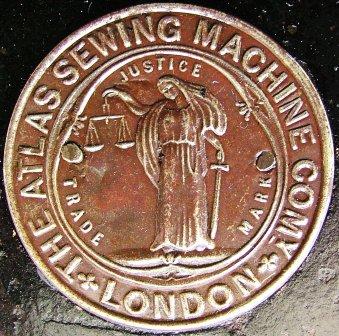
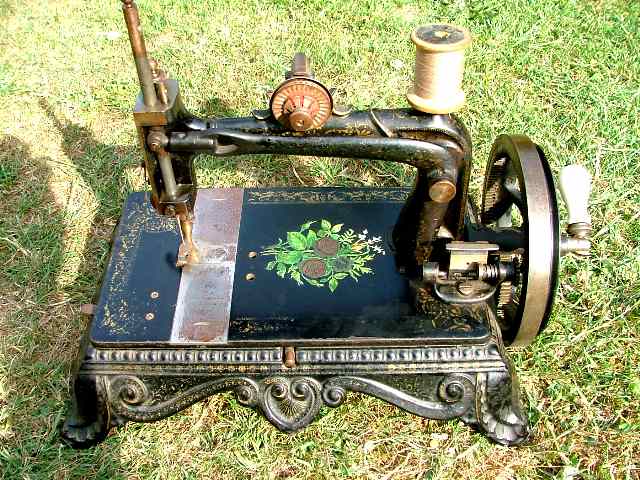
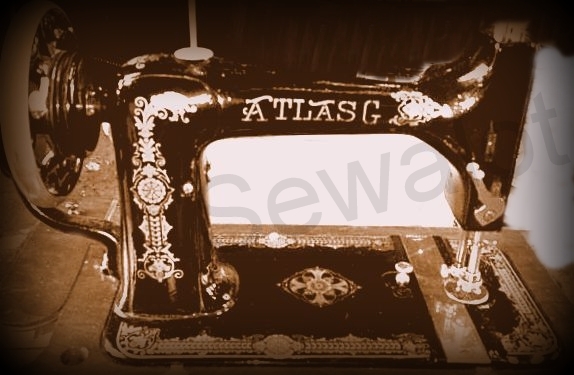
The Atlas Sewing Machine circa 1874
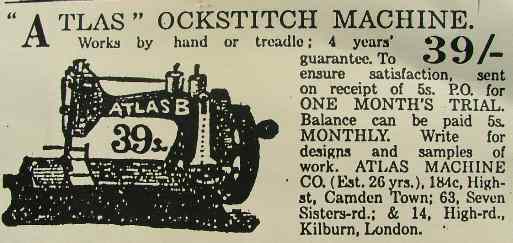
In an advert in the Daily Express of 1900 The Atlas Machine Company stated that they had been established for 26 years. This would make the companies first trading year around 1874.
The Atlas Sewing Machine
Company traded from
182 and 184c High Street in
Their first imported Atlas
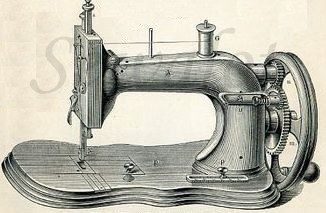
model was the ‘A’ made by Bremer und Brückmann. This
was a
Elias Howe copy made
under licence
from his 1860’s design. The machine also sold as the Collier
Advanced by Collier’s in Clapham Road, London and the Brunonia.
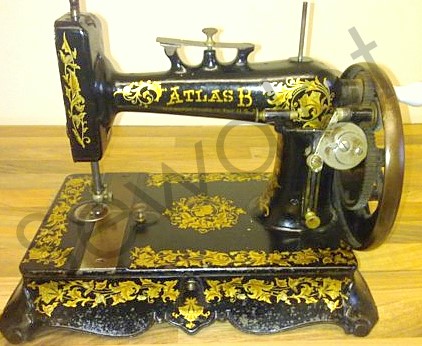
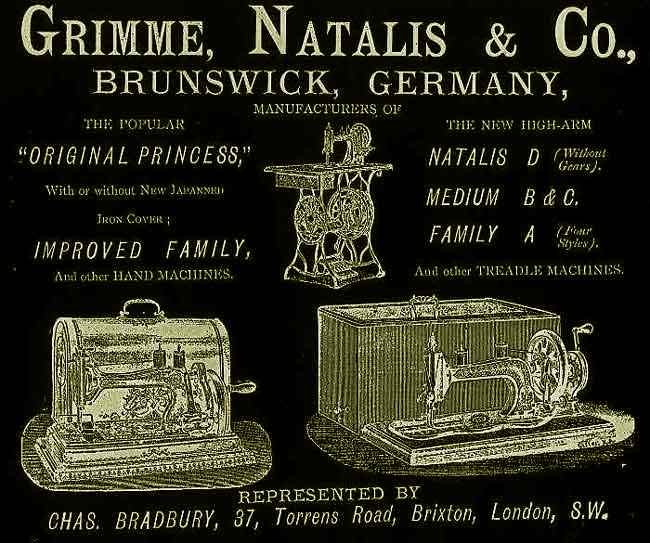
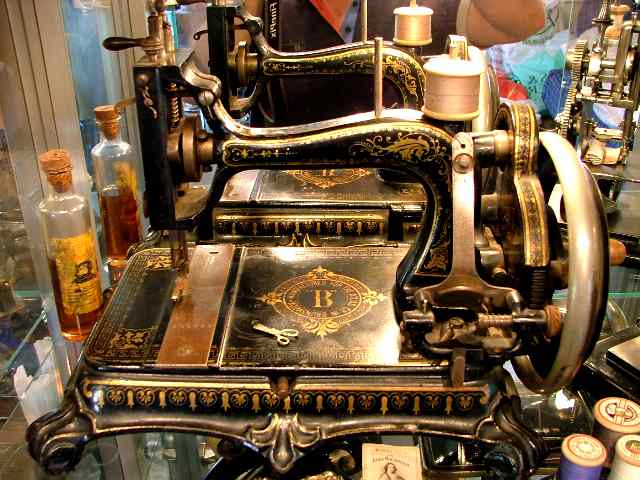
Then came the very popular vibrating shuttle model ‘B’ another German import which was made by the Grimme & Natalis Co, Braunschweig. The model 'B' clearly states on the bed made in Brunswick, which sounds so English. There seemed to be a thousand Brunswick's from Brighton to Scarborough but in reality it was a German import from Braunschweig.
The Atlas
Sewing machine Co
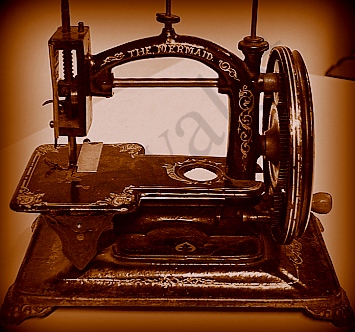
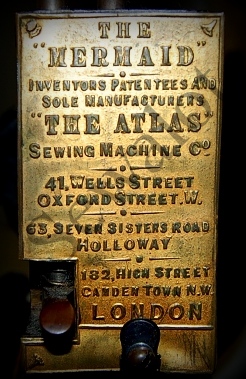
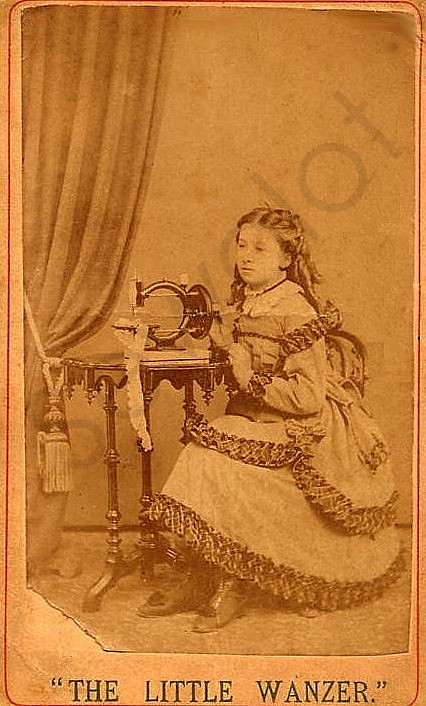
A super-rare Mermaid sewing machine kindly sent in by Frances Stonehouse of the Kirklees Museums West Yorkshire and possibly being put up for auction in 2016. This machine looks like a cross between a Weir/Raymond and an early Wanzer but I have never discovered who actually made it. Maybe as stated below Atlas did actually manufacture for a short time?
Anything made before the 1890's Trade Descriptions Act was exempt from accurate description. Any company could claim, more or less, what they liked. Putting Brunswick on the bed would make buyers think they were buying British and not in fact the British pronunciation of 'Braunschweig,' Germany.
Very few importers bothered to point out the machine was
German. One exception was Charles Bradbury as can be see in his advert
further down.
K. A. Natalis and Carl Grimme had been producing sewing machines independently but in December 1870 they joined forces. The model ‘B’ was fondly nicknamed the Brunswick Special. All model ‘B’s’ were guaranteed for a period of four years and retailed in 1900 for the princely sum of nearly two pounds. You will notice two model B Atlas machines. I can only assume that they switched suppliers half way through deliveries?
Remember the weekly average wage was probably only about ten
shillings. So the machine would have been a months wages! You can see
from the advert that they had retail premises in Severn Sister
Road and Kilburn High Road, London.
Several other wholesalers such as the Co-op or Co-operative Society sold the imported Atlas but under their own brand name. The Atlas Sewing Machine Company imported machines from all over the world including Germany, America and Canada. From Canada they imported the Atlas Countess sewing machine which was actually made by Richard Mott Wanzer.
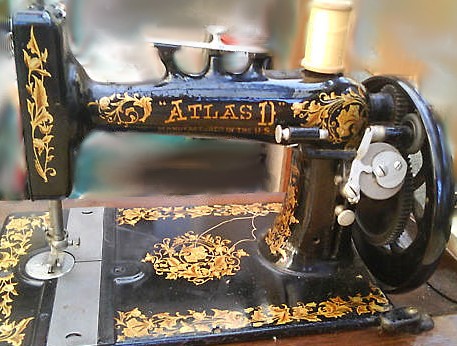
Atlas Sewing Machine Models Atlas Model A Atlas Model B, German and American models. Atlas Model C Atlas Model D (no gears, cam model) Atlas Model G Atlas Countess sewing machine Atlas Original Princess sewing machine Atlas Mermaid lockstitch sewing machine Atlas Una sewing machine Atlas New Family, a copy of the Singer 12 Atlas Improved Family sewing machine
The model B and the later
model ‘C’ and ‘D’ were popular from the late 1880’s up until
just before the First World War when many Germany
companies switched to arms manufacturing. They also sold the Countess,
the Original Princess
and Una sewing machines.
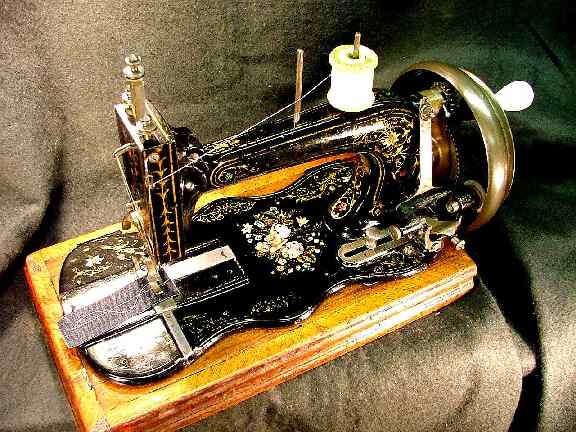
There was a beautiful Atlas Mother of pearl inlay fiddlebase model, basically a smaller 3/4 size copy of the Singer New Family transverse shuttle.
Although Grimme & Natalis
made similar machines it could also have been imported from
the German company that made the Vesta machine called LOD, short for L.O.
Dietrich. They produced machines as early as 1871.
Or possibly Gustav Winselmann of
Mother of pearl became so expensive that by the late
Victorian period it had become un-commercial. Having to hand polish 15
layers of japanning to find the inlaid mother of pearl took endless
hours of work, but how wonderful it looked.
The last machine I am
aware of at the moment is the model ‘D’ imported from the Giant
American
New Home
Sewing Machine Company previously the Gold Medal Sewing Machine
Company and today trading as Janome.
Atlas Improved New Family sewing machine. Possibly a Winselmann, Grimme or Dietrich Import. Also called the Atlas Fiddlebase. Slightly smaller than their New Family model.
The Grimme & Natalis
Company's Agent in
Now, one additional point to mention is that there was an Atlas marketed in America around the same period, probably by the New Home Sewing Machine Co.
I have not seen a mention of the British Atlas Company after the First World War and expect they ceased trading around that period. It makes sense as many of their machines were German imports and very few people in the UK bought anything German after the Great War.
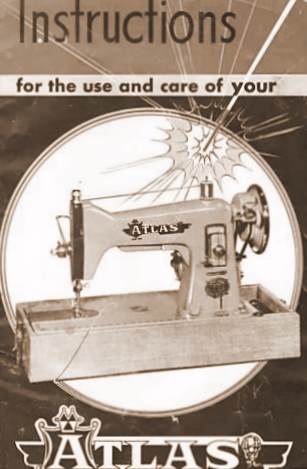
Also in America there was another sewing machine company in the 1950's that sold the Atlas Deluxe sewing machine which was made by the Japanese Brother Company but they are not connected to our British firm and it folded in 1962.
Antique sewing machine values Atlas sewing machines are rare far rarer than, for example, Singers or Jones machines. They do turn up now and again since Ebay came on line so you can occasionally pick up one of these rare old beauties. The most expensive one I have seen in superb condition went for over £700, $1200 but it is all up to model and condition. More basic poor condition ones do not fetch that amount and I have never seen an Atlas Una sewing machine or Atlas Original Princess sewing machine come onto the market. News Flash!
Most of us know the name Singer but few are aware of his amazing life story, his rags to riches journey from a little runaway to one of the richest men of his age. The story of Isaac Merritt Singer will blow your mind, his wives and lovers his castles and palaces all built on the back of one of the greatest inventions of the 19th century. For the first time the most complete story of a forgotten giant is brought to you by Alex Askaroff. News Flash! Alex's books are now all available to download or buy as paperback on Amazon worldwide.
"This
may just be the best book I've ever read."
"My five grandchildren are
reading this book aloud to each other from my Kindle every Sunday.
The way it's written you can just imagine walking
beside him seeing the things he does. News Flash! Alex's books are now all available to download or buy as paperback on Amazon worldwide. CONTACT: alexsussex@aol.com Copyright © |
||||
|
|
I hope you found this research useful and as I am constantly updating my information. If you found this page helpful or if you have any details please do mail me. Bye for now,
Dear Alex,
Dear alex
I am from srilanka, your publication about sewing machine is very grate and wonderful. I have old sewing machine my father said ’silent model’ thanks again.
upali madana
|
|
||